


Center of Islamic Civilization: A visual dialogue between history and truth
🔴 “A Center that has become the voice of history”
🔴 “Exhibitions that awaken the imagination”
🔴 Not just aesthetics, but expressions of meaning
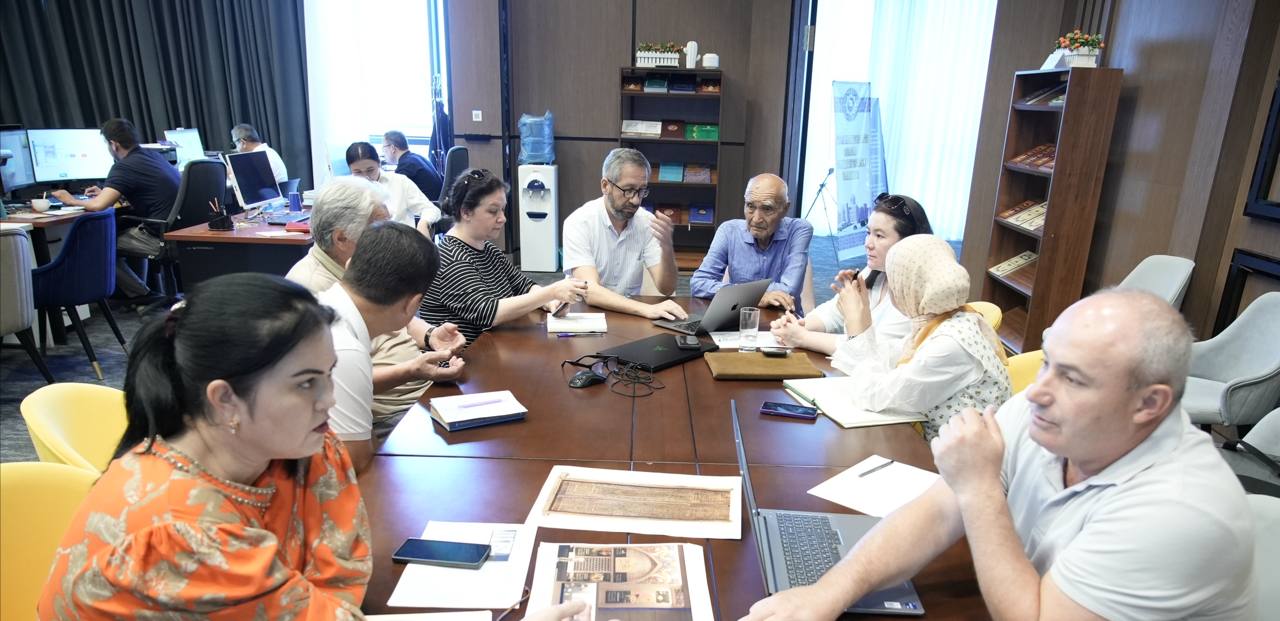 At the initiative of the President of the Republic of Uzbekistan, the Center of Islamic Civilization has entered a significant new phase in its development one that demands even greater responsibility in both content and meaning.
The current focus in the construction of the Center is to enrich its exhibitions and ensure they are historically, scientifically, and culturally comprehensive and impactful. In this regard, teams of historians, archaeologists, ethnographers, designers, and technical experts are working in close collaboration.
A scholarly approach to civilizational heritage
At the latest discussion held at the Center, the stages of the exhibition spanning from antiquity to the early Middle Ages were reviewed, particularly the cultural and geo-civilizational connections between Bactria and Turan.
During the meeting, the model of the gate on the Bactrian defensive wall was analyzed, and it was noted that it did not correspond to ancient architectural traditions and deviated from historical accuracy. Experts emphasized the need to recreate this section based on authentic historical foundations and decorative elements, as well as to enhance the exhibition with geo-cultural context.
Additionally, a proposal was made to place a distant historical landscape behind the gate. This addition could enhance the exhibition’s depth and emotional resonance, evoking a profound sense of historical grandeur in the viewer.
Content — the soul and responsibility of the center
A rich and meaningful exhibition is the core mission of the Center. Current analyses of some of the models and displays installed in certain halls reveal that they are not fully supported by comprehensive scientific justification. As a result, they require revision, renewal, or replacement with other more suitable exhibits.
Dr. Mirsodiq Iskhaqov, Doctor of Historical Sciences:
“Some material monuments no longer exist today. Therefore, it is necessary to search for them, restore them, or even acquire them from abroad. To this end, the Center’s leadership has initiated international negotiations and established connections with museums and cultural organizations”.
At present, the Center’s leadership and members of the Scientific Council are actively working as a team to acquire essential artifacts, models, and exhibits.
Design — not just aesthetics, but the expression of meaning
The meeting also included participation from designers of France’s Avesta Group, during which the structure of the exhibition models, their logical composition, visual impact, and conceptual depth were discussed. Notably, the designers are not merely responsible for visual appealvthey are tasked with accurately conveying historical reality through visual language.
“The designer is not a historian, but must be a companion to the historian” — this idea became the central motto of the discussion.
Each exhibit must be regarded as a tangible representation of a specific era, people, region, and social reality. This approach transforms the exhibitions from mere displays into immersive spaces that engage the imagination and convey knowledge.
In developing its content, the Center of Islamic Civilization is undergoing a complex process not only in historical terms, but also in educational, aesthetic, and technological dimensions. This stage represents the most critical phase of the Center’s activity and is expected to serve as a model experience not only for Uzbekistan, but for the entire Muslim world.
Most read

Over 100 experts from more than 20 countries of the world are in Tashkent!

President of Serbia Aleksandar Vučić visited the Islamic Civilization Center in Uzbekistan

The Center for Islamic Civilization – a global platform leading towards enlightenment
