


The dynasty that initiated the Islamic Renaissance in Central Asia
🔴 One of the most advanced centers of the Muslim East
🔴 The revival of a civilization beneath the sands!
The Samanid dynasty established a strong centralized state in Central Asia and Khorasan in the 9th–10th centuries, ushering the region into an era of political, economic, and cultural prosperity. The territories under their control included parts of today’s Uzbekistan, Tajikistan, Afghanistan, and Iran.
A dynasty that began with Saman Khudat
The dynasty’s name is linked to their ancestor, Saman Khudat. He was initially a local ruler under the Caliphate, but his descendants became known as the first native dynasty to declare independence after the Umayyad and Abbasid rule.
A just ruler
The greatest and most influential ruler of the dynasty was Ismail ibn Ahmad (Ismail Samani). In 892, he united all of Transoxiana and Khorasan, founding an independent state. Ismail Samani is remembered in history for his just governance, closeness to the people, and religious tolerance.
“The Samanid Renaissance”
Under Ismail Samani, science, literature, architecture, and Islamic scholarship flourished. Madrasahs, libraries, and mosques were built, and scholars and poets were supported.
This was the era when the intellectual legacy of figures such as Imam Bukhari, Rudaki, Farabi, and Ibn Sina emerged.
Trade and coinage – symbols of state power
The Samanid state-controlled trade routes, keeping the paths from China to Byzantium open and secure. The gold, silver, and copper coins they minted circulated not only in Central Asia but also in Afghanistan, Iran, and India, demonstrating the state’s economic power.
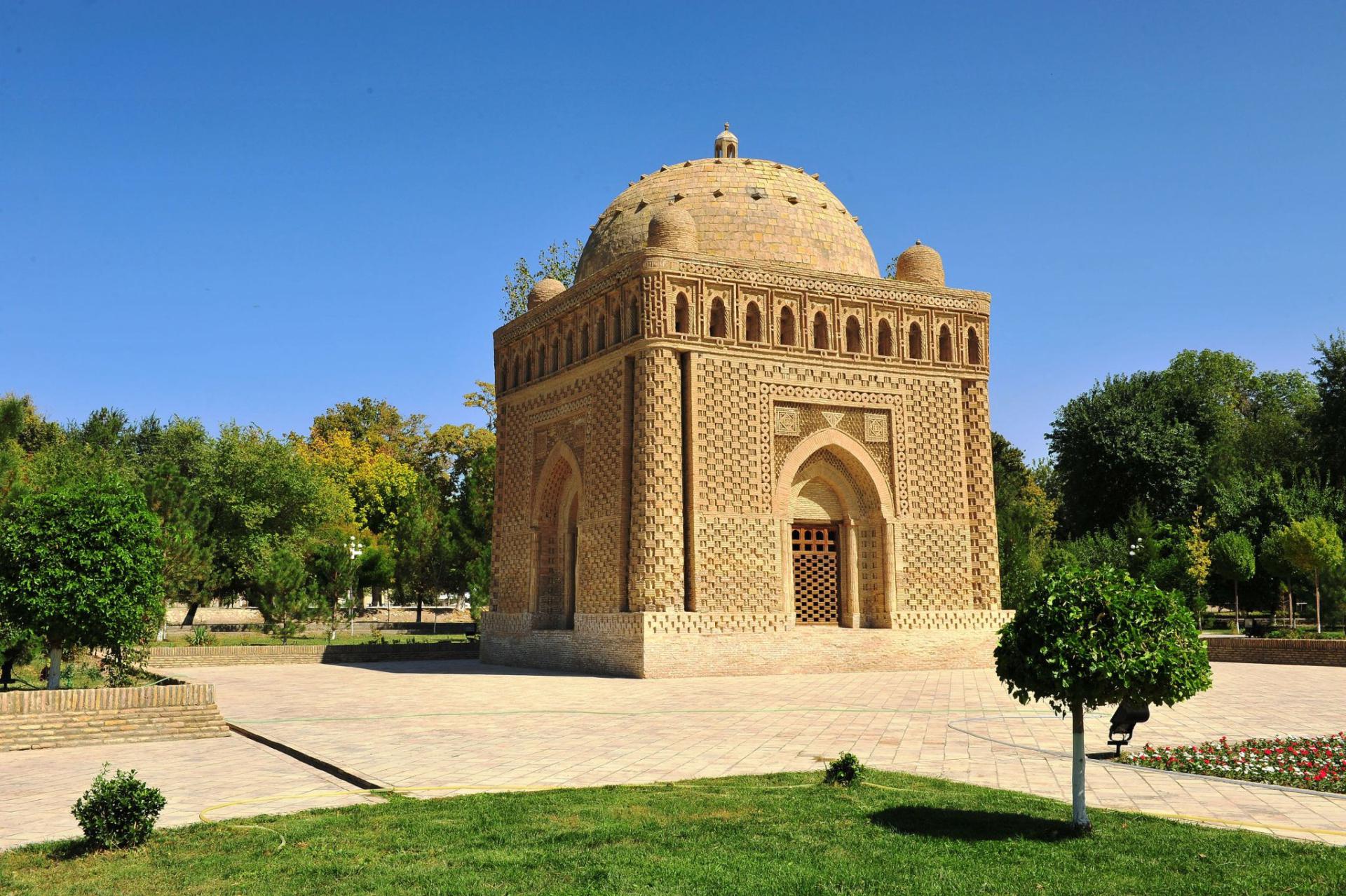
The mausoleum of Ismail Samani – a masterpiece of architecture
The Ismail Samani Mausoleum in Bukhara is one of the most valuable monuments of Islamic architecture from the 9th–10th centuries. Built from baked brick and decorated with geometric patterns, it has been remarkably well preserved for centuries. Today, the mausoleum is one of Uzbekistan’s national symbols and a major tourist destination.
A rich legacy and its significance
The Samanid dynasty is remembered in Central Asian history as a symbol of political independence, cultural flourishing, and tolerance. Today, an exhibition dedicated to the Samanid era is being prepared at the Center of Islamic Civilization in Tashkent. This historical legacy continues to serve as a source of inspiration for future generations.
Guzal Beknazarova
P/S: This article may be republished by citing the official website of the Center.
Most read

Over 100 experts from more than 20 countries of the world are in Tashkent!

President of Serbia Aleksandar Vučić visited the Islamic Civilization Center in Uzbekistan

The Center for Islamic Civilization – a global platform leading towards enlightenment
