


“Horoscope of the Timurid Era”
🔴 Iskandar Mirza’s mysterious horoscope
🔴 Astrology, calligraphy, and politics – how were they interwoven in the Timurid Era?
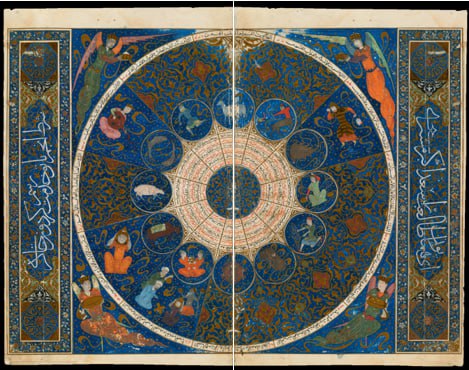
Stars have fascinated people since ancient times. Celestial maps, the movement of the heavens, and attempts to predict the future have always intrigued humanity — and this interest reached its peak during the Timurid period.
Iskandar Sultan Mirza (1384–1416), a prominent statesman of the Timurid dynasty, was the son of Umarshaykh Mirza and the grandson of Amir Temur. He ruled Isfahan, Shiraz, and Yazd, while also showing a great passion for science — especially astrology.
The roots of astrology go back to the 2nd millennium BCE in Mesopotamia. Later, the 12-sign zodiac system was formed in Babylon and merged with Greek traditions to create a system of personal horoscopes. These scientific ideas eventually reached the Timurid courts and played an important role in the lives of rulers.
The personal horoscope prepared for Iskandar Sultan Mirza is not just a prediction. It is a unique work that combines astronomy, astrology, and the art of calligraphy. The tradition of linking the fate of sultans and amirs to the stars was widespread in the East and became popular in European royal courts of the 14th–15th centuries as well.
Today, this horoscope has taken a worthy place in the book-album Pearls of Uzbekistan’s manuscript heritage published by the Center of Islamic Civilization in Uzbekistan. It is not only a historical document but also a testament to the science and refined aesthetic taste of the Timurid era.
Most read

Over 100 experts from more than 20 countries of the world are in Tashkent!

President of Serbia Aleksandar Vučić visited the Islamic Civilization Center in Uzbekistan

The Center for Islamic Civilization – a global platform leading towards enlightenment
