


The Fergani astrolabe, which laid the foundation of the European scientific revolution, is on display at the mega project exhibition in Uzbekistan!
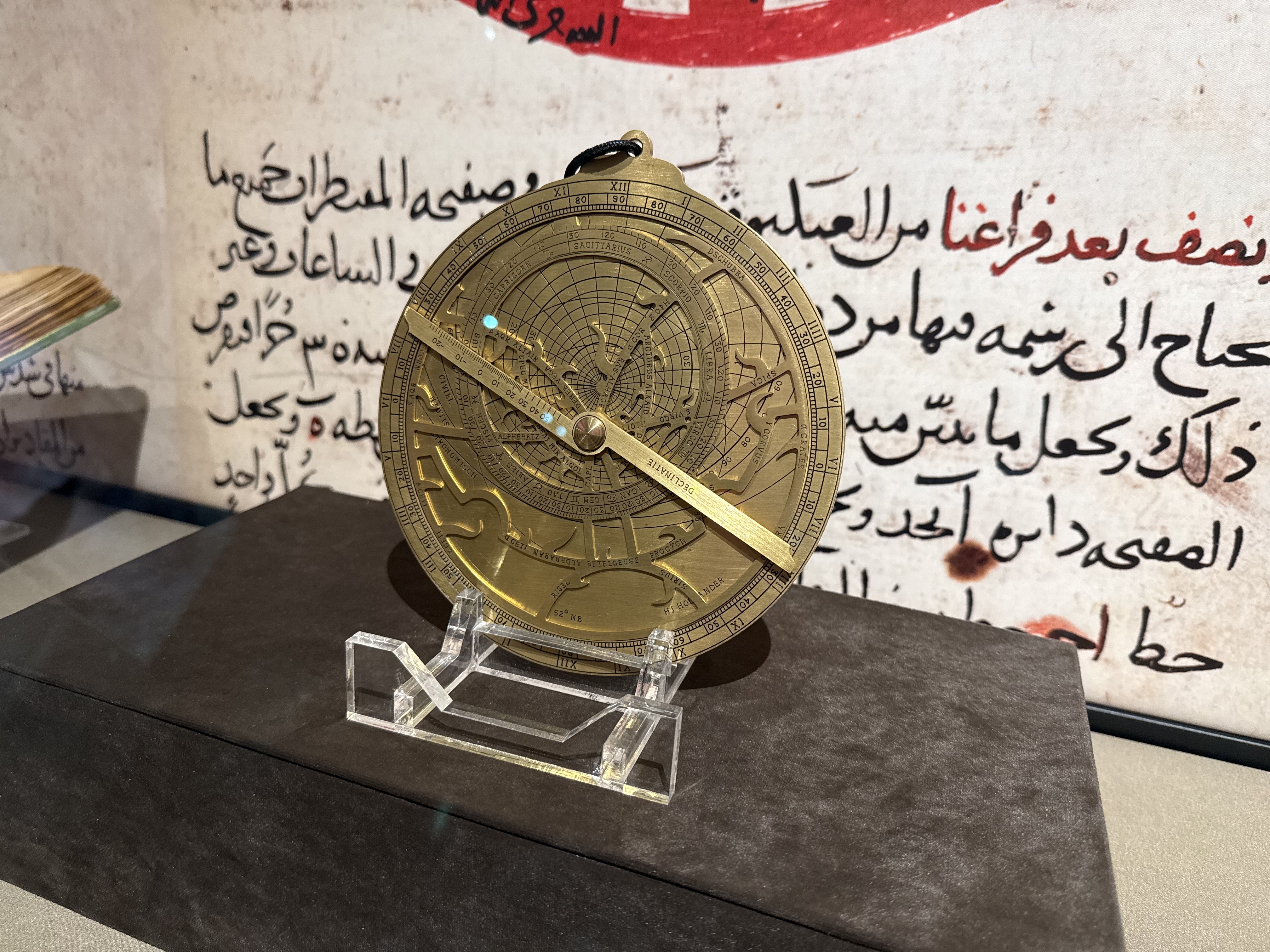 Astrolabe. Central Asia. Metal. Diameter: 74.4 cm
The astrolabe specially brought from the Netherlands is not an ordinary museum exhibit, but a jewel of knowledge that has traveled across centuries. Once revealing the secrets of the sky, determining prayer times, and serving as a bridge of knowledge between continents, this invaluable instrument today demonstrates the high level of human intellectual achievement at the Center’s museum.
The astrolabe specially brought from the Netherlands is one of the most important exhibits of the central exposition.
The astrolabe is considered one of the oldest and most significant scientific instruments in human history. Although some of its elements were created in the 2nd century BCE by the Greek scholar Hipparchus, its perfected form was developed in scientific circles starting from the 9th century.
Al-Khwarizmi, Ahmad al-Farghani, and other great scholars refined the theoretical and practical foundations of the astrolabe and widely used it in astronomical calculations, determining prayer times, identifying the qibla direction, and calculating geographic distances.
Through Islamic culture, the astrolabe reached Europe. Spreading from the Iberian Peninsula to England and the Netherlands, this science influenced Europe’s scientific revolution. The construction principles of European astrolabes were based on al-Farghani’s scientific legacy.
“This holds true for any azimuthal circles. Greek scholars developed almucantar circles, but their astrolabes were incomplete. The great astronomer, mathematician, and geographer al-Farghani, however, also provided precise mathematical proofs and numerical tables for constructing an astrolabe. Therefore, the design of the European astrolabe was largely based on al-Farghani’s principles,” said Fakhriddin Ibragimov, Doctor of Philosophy in History.
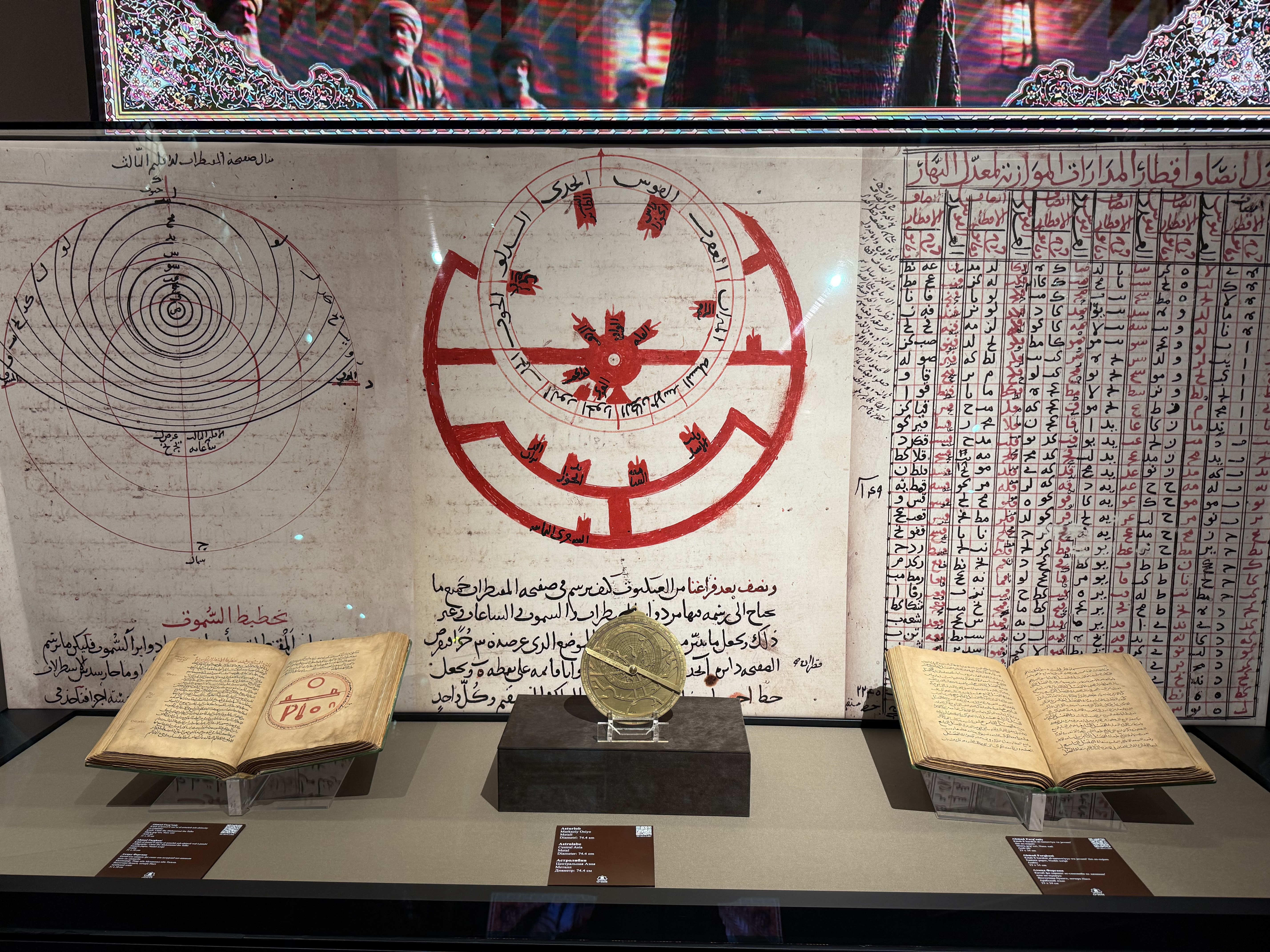
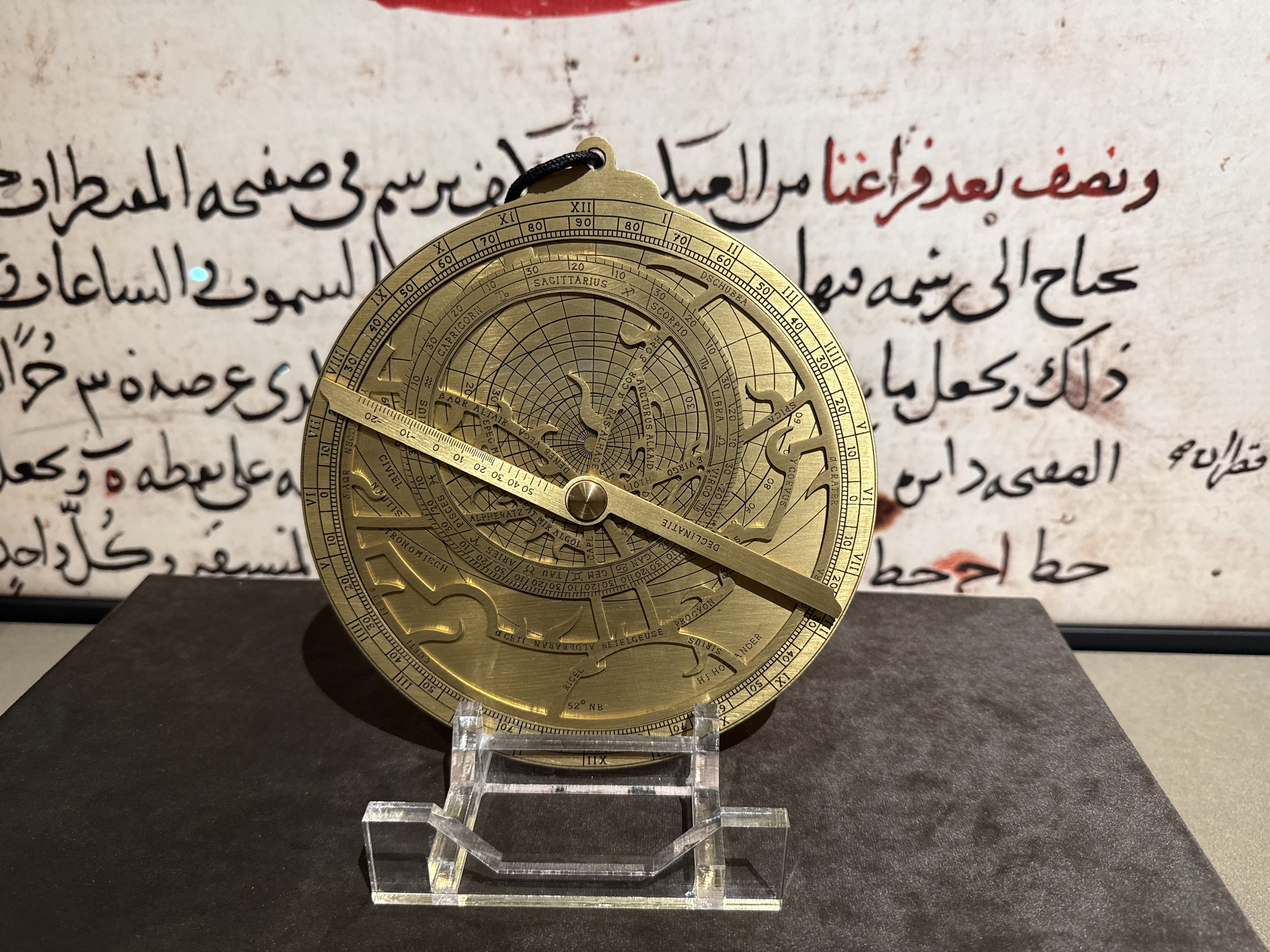
The modern astrolabe displayed in the “First Renaissance Period” section of the Center’s museum exposition is inspired by the design of a famous model made in the 16th century in Leuven, Belgium. On the reverse side, the rectangular blocks characteristic of traditional Arabic astrolabes are preserved, while modern functions longitude correction and the equation of time have been added. Its diameter is 18 cm. Interestingly, due to the Earth’s axial tilt, the famous star Antares is not included; instead, the star Dschubba from the Scorpius constellation has been incorporated.
Such instruments presented in the Center’s exposition reveal the invaluable contribution of Central Asian scholars to the progress of humanity.
Most read

Over 100 experts from more than 20 countries of the world are in Tashkent!

President of Serbia Aleksandar Vučić visited the Islamic Civilization Center in Uzbekistan

The Center for Islamic Civilization – a global platform leading towards enlightenment
