


Where is the rare exhibit in the history of astronomy located?
Abu Rayhan Biruni is one of the great thinkers who produced unparalleled discoveries in world science in his time. His scientific legacy is of immense significance not only for Central Asia but for the development of human civilization as a whole. In particular, the astronomical diagrams and scientific conclusions presented in his work At-Tafhim were unprecedented innovations for their era. This rare exhibit from the history of astronomy can be seen at the Islamic Civilization Center in Uzbekistan.
In the work, the phases of the Moon, its motion around the Earth, and its position relative to the Sun are depicted with geometric precision. Biruni scientifically explains the interconnected movement of celestial bodies and clearly and simply elucidates how the phases are formed. His diagrams are a vivid example of the harmony between theoretical knowledge and practical observation.
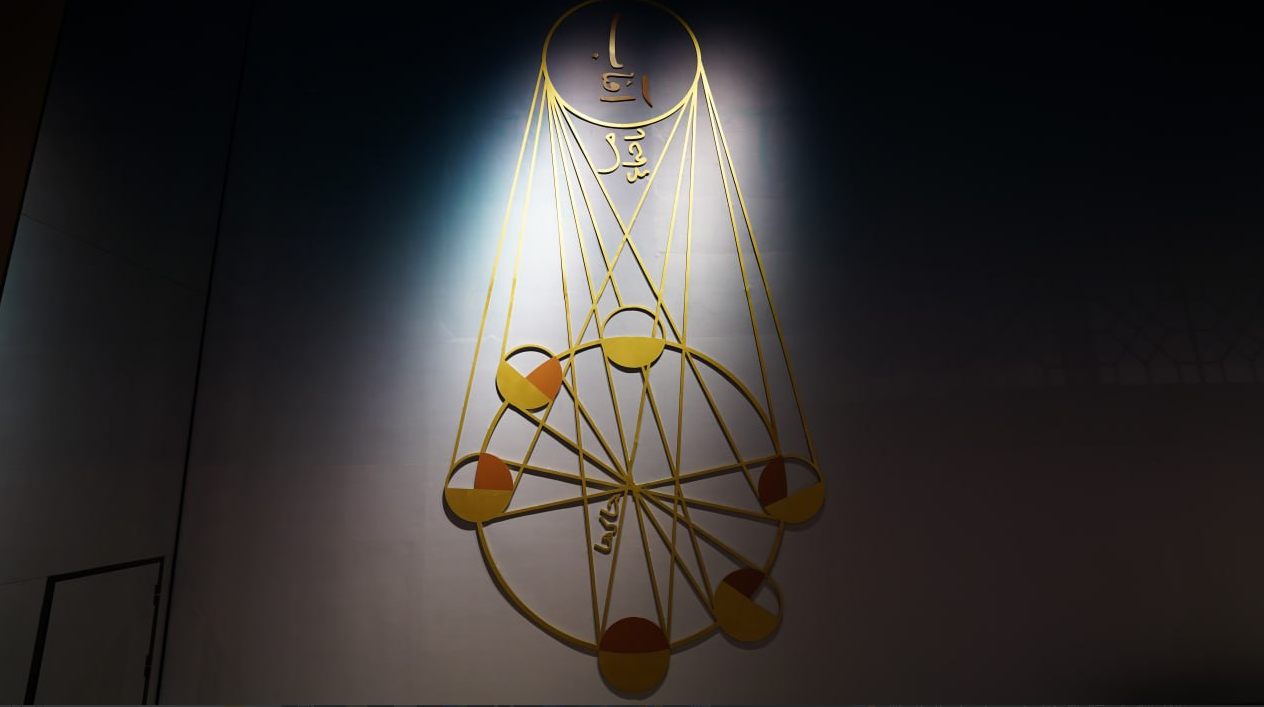
Biruni’s diagram of the phases of the Moon
According to historical sources, Biruni personally observed a lunar eclipse three times. The first two observations took place on February 20 and August 15, 1003, in Jurjan (the Khorasan region), and the third was conducted in the city of Gurganj. These precise dates clearly demonstrate the scholar’s keen observational skills and show that he did not limit himself to theory alone.
Biruni explains the nature of eclipses as follows: “A lunar eclipse occurs due to the Earth’s shadow, and a solar eclipse occurs when it is obscured by the Moon.” Through these definitions, the scholar scientifically clarifies the physical causes of eclipses. His observations regarding the lunar eclipse beginning from the eastern side, and during a solar eclipse the Moon approaching from the western side and gradually covering the Sun, are also of particular importance. He explains why the degree of an eclipse differs from one city to another by geographical and physical factors.
According to Botirjon Abdullaev, a junior research fellow at the Abu Rayhan Biruni Institute of Oriental Studies of the Academy of Sciences of the Republic of Uzbekistan, Biruni’s views were extremely advanced for his time.
“Biruni achieved a high degree of accuracy in observing celestial phenomena. His ideas on astronomy are fully consistent with modern science today. Many of the issues raised by Biruni have not lost their relevance even now,” says Botirjon Abdullaev.
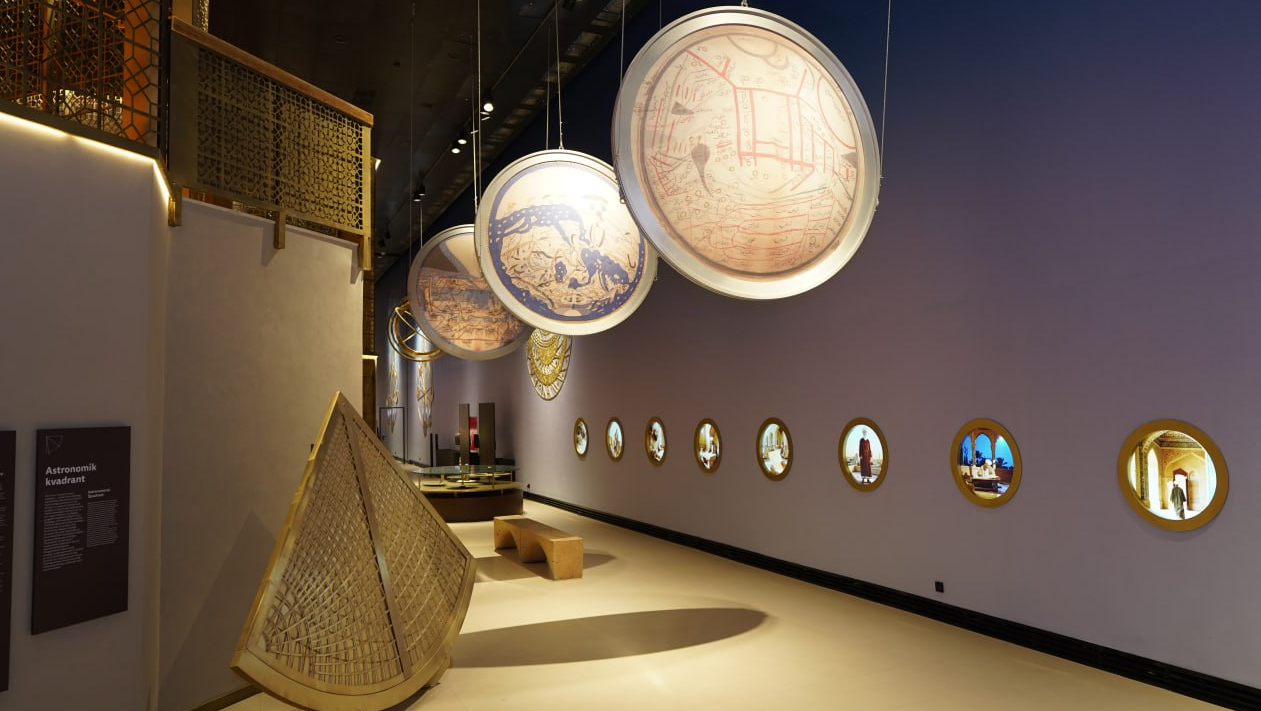
The ‘Wall of Discoveries’ in the First Renaissance period exhibition
Today, the diagrams and sources presented in Biruni’s At-Tafhim are displayed in the exhibitions of the Islamic Civilization Center, established on the initiative of President Shavkat Mirziyoyev. These rare exhibits, located in the section dedicated to the First Renaissance period, are significant not only scientifically but also culturally and educationally. They vividly demonstrate the scientific potential of our great ancestors and serve as a source of inspiration for the younger generation.
Most read

Over 100 experts from more than 20 countries of the world are in Tashkent!

President of Serbia Aleksandar Vučić visited the Islamic Civilization Center in Uzbekistan

The Center for Islamic Civilization – a global platform leading towards enlightenment
