


The secrets of Eastern sciences that awakened Europe are being revealed in the Center’s exhibition

“First Renaissance Period” section. Capsule 2: “Bayt al-Hikma”
Today, the world is looking at the history of science from a new perspective. The international scholarly community increasingly recognizes that the scholars who laid the foundations of algebra and scientifically proved the shape of the Earth and the motion of celestial bodies emerged precisely from the land of Uzbekistan. The “First Renaissance Period” section at the Islamic Civilization Center, through vivid exhibitions, reveals the scientific power of the Eastern Renaissance led by great thinkers such as al-Khwarizmi and al-Farghani, showing the very foundations upon which human progress was built.
This scientific environment is broadly and meaningfully presented in the “First Renaissance Period” section of the Islamic Civilization Center in Uzbekistan. The second capsule of the section is dedicated to the famous Bayt al-Hikma (House of Wisdom) in Baghdad, through which the essence of the scientific awakening that took place in the Islamic world is revealed.
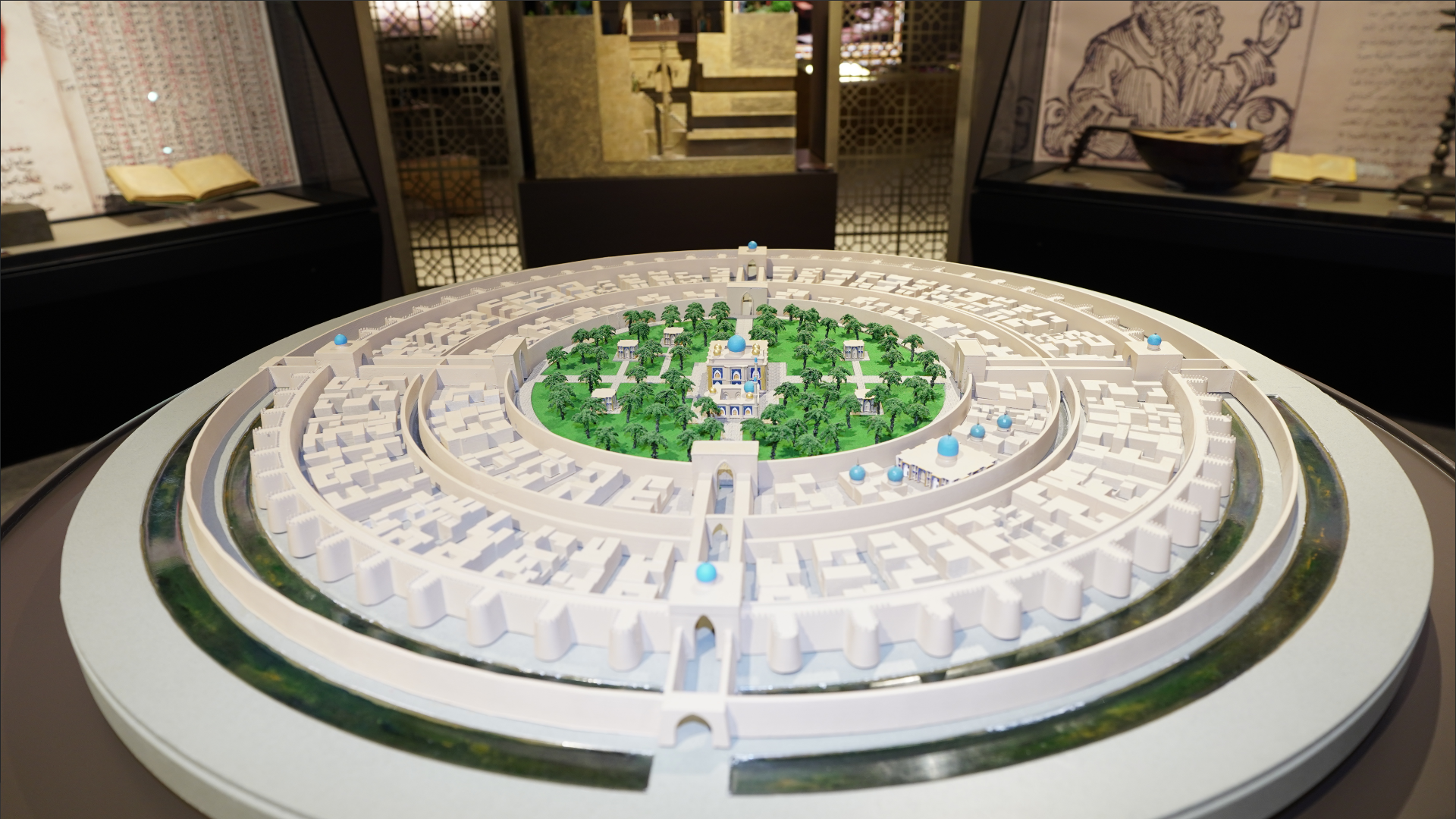
Model of Bayt al-Hikma
Established in the 9th century during the Abbasid Caliphate, Bayt al-Hikma functioned as a library, translation center, and hub for scientific research and scholarly exchange. Founded during the reign of Caliph Harun al-Rashid, this institution reached its peak of development under Caliph al-Ma'mun. Philosophical and scientific works in Greek, Indian, Persian, and Syriac were translated into Arabic, leading to rapid advancements in mathematics, astronomy, medicine, geography, and philosophy.
Bayt al-Hikma was headed by Muhammad ibn Musa al-Khwarizmi. Muhammad al-Khwarizmi (783–850) made an unparalleled contribution to the development of the exact and natural sciences and laid the foundation for global scientific progress through his groundbreaking discoveries. He authored more than 20 works across various fields and is recognized as the founder of algebra.
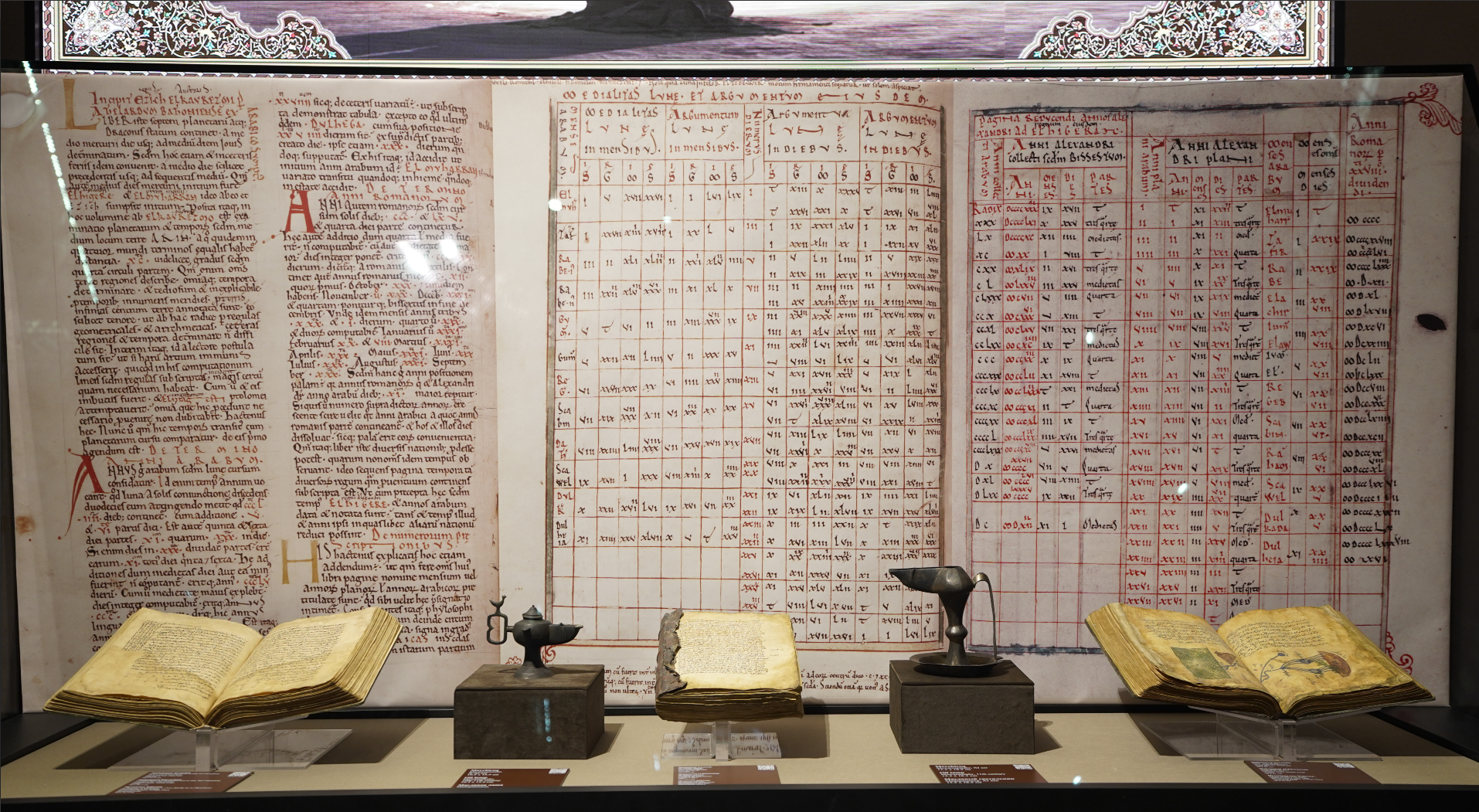
Section dedicated to the scientific legacy of Muhammad ibn Musa al-Khwarizmi
In his work Al-Jabr wa al-Muqabala (“The Book of Completion and Balancing”), algebra was for the first time established as an independent discipline with general rules for solving linear and quadratic equations. Moreover, under al-Khwarizmi’s leadership, more than 70 scholars worked on compiling a world map, a collection that became known in history as the “Ma'mun World Map.”
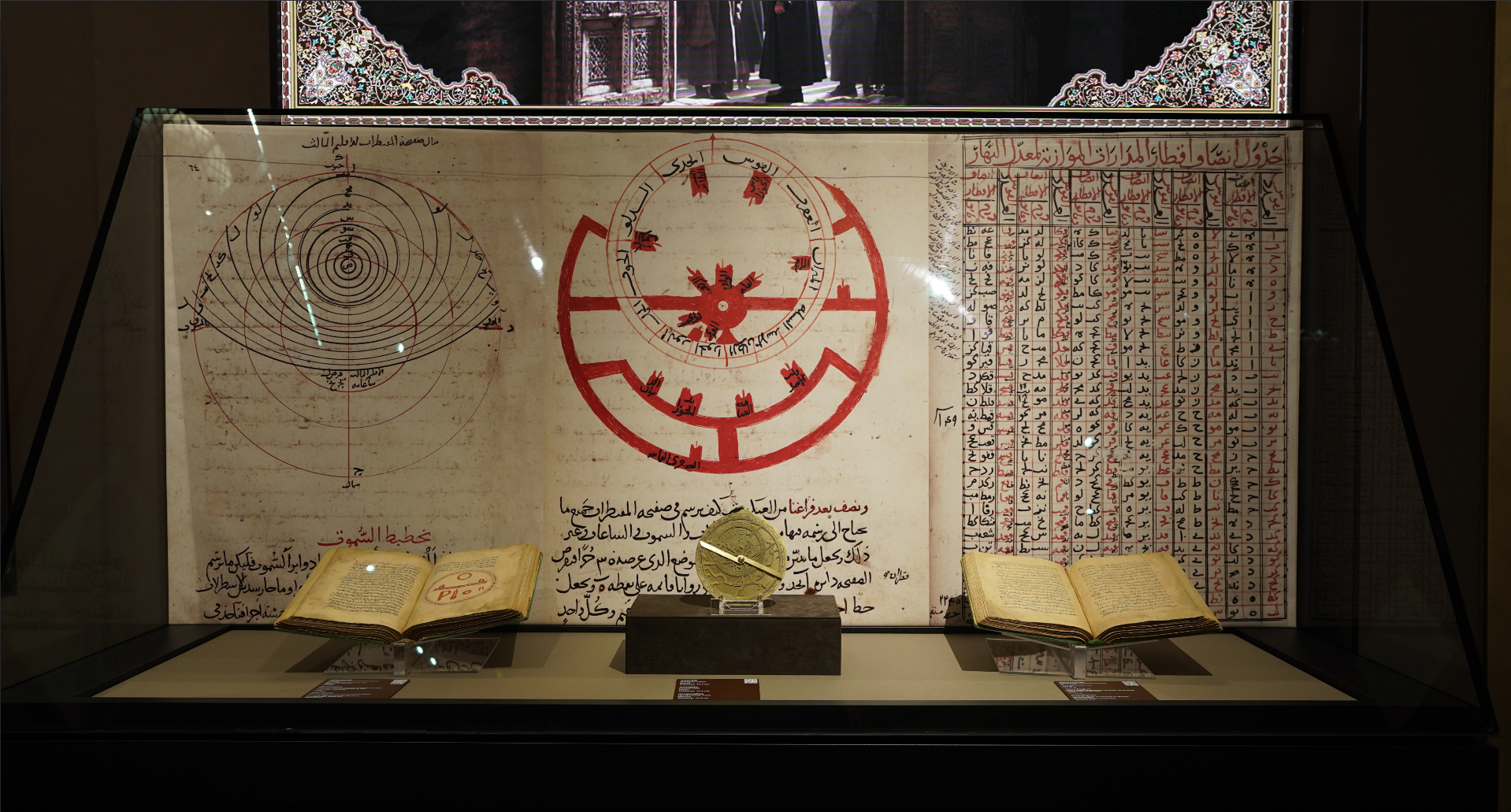
Section dedicated to the scientific legacy of Ahmad al-Farghani
Another great scholar who worked at Bayt al-Hikma was Ahmad al-Farghani, known in Europe as Alfraganus. He conducted an in-depth study of the chronicles of Arab, Syriac, Roman, Persian, and Egyptian peoples and scientifically analyzed the differences in their calendars. He determined the inclination of the ecliptic relative to the equator and achieved results far more accurate than those of Ptolemy from the 2nd century. He was the first to calculate the diameters of planets and their greatest distances from the Earth and scientifically proved that the Earth is spherical.
In his work The Book on the Use of the Astrolabe, al-Farghani scientifically substantiated Ptolemy’s theory of stereographic projection, that is, the theorem concerning the astrolabe. Written around 856 in Cairo, this work used spherical trigonometry calculations to present important information about the Earth’s shape and size. In 861, he repaired and fundamentally improved the nilometer located on Rawda Island in Cairo.
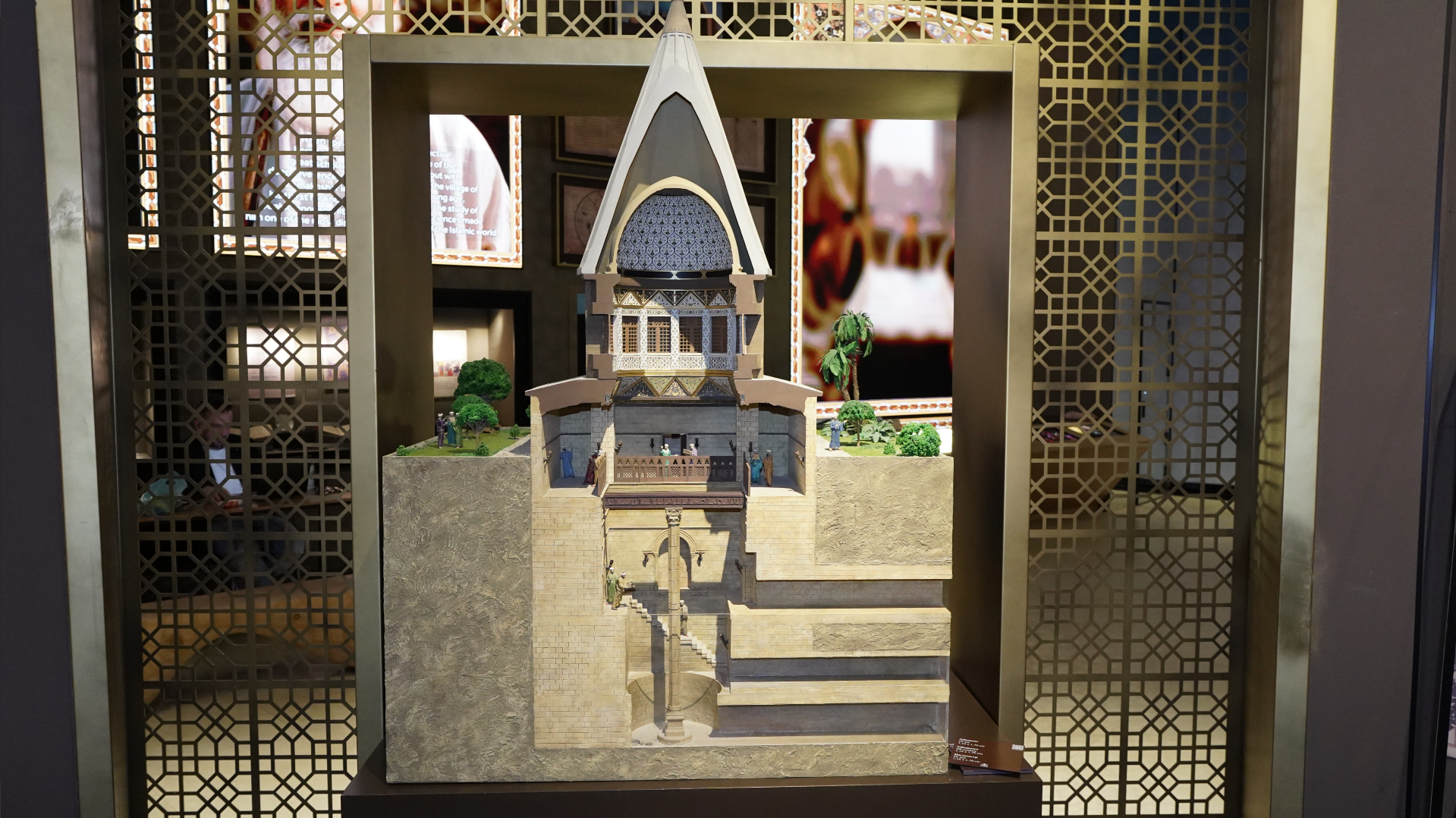
Model of the Nilometer
The exhibition at the Islamic Civilization Center presents a model of the nilometer, illustrating the process of accurately measuring water levels through a rectangular well with a central column and measurement scale. In addition, a large-scale astrolabe model placed at the center of the capsule vividly demonstrates the high level of medieval astronomy and scientific thought. Ahmad al-Farghani’s treatises on the astrolabe thoroughly reveal the theoretical foundations of this instrument.
Through Bayt al-Hikma, the scientific heritage of antiquity was preserved and later reached the European Renaissance. Therefore, it is recognized as one of the most important scientific centers not only in the Islamic world but in the entire history of humanity. Unfortunately, when the Mongols captured Baghdad in 1258, Bayt al-Hikma was destroyed and many rare manuscripts were lost.
Today, this great heritage is being revived. The large-scale reforms being implemented in Uzbekistan, along with the high priority given to science, enlightenment, and culture, represent the logical continuation of these great scientific traditions. The rich heritage displayed at the Islamic Civilization Center testifies that the foundation of the Third Renaissance is being laid in New Uzbekistan and that the scientific path initiated by al-Khwarizmi and al-Farghani continues consistently.
Shahnoza Rahmonova
P.S. The article may be republished with a link to the Center’s official website.
Most read

Over 100 experts from more than 20 countries of the world are in Tashkent!

President of Serbia Aleksandar Vučić visited the Islamic Civilization Center in Uzbekistan

The Center for Islamic Civilization – a global platform leading towards enlightenment
