


The Khorezm Ma’mun Academy, which made a tremendous contribution to world civilization, is being presented to the world more broadly

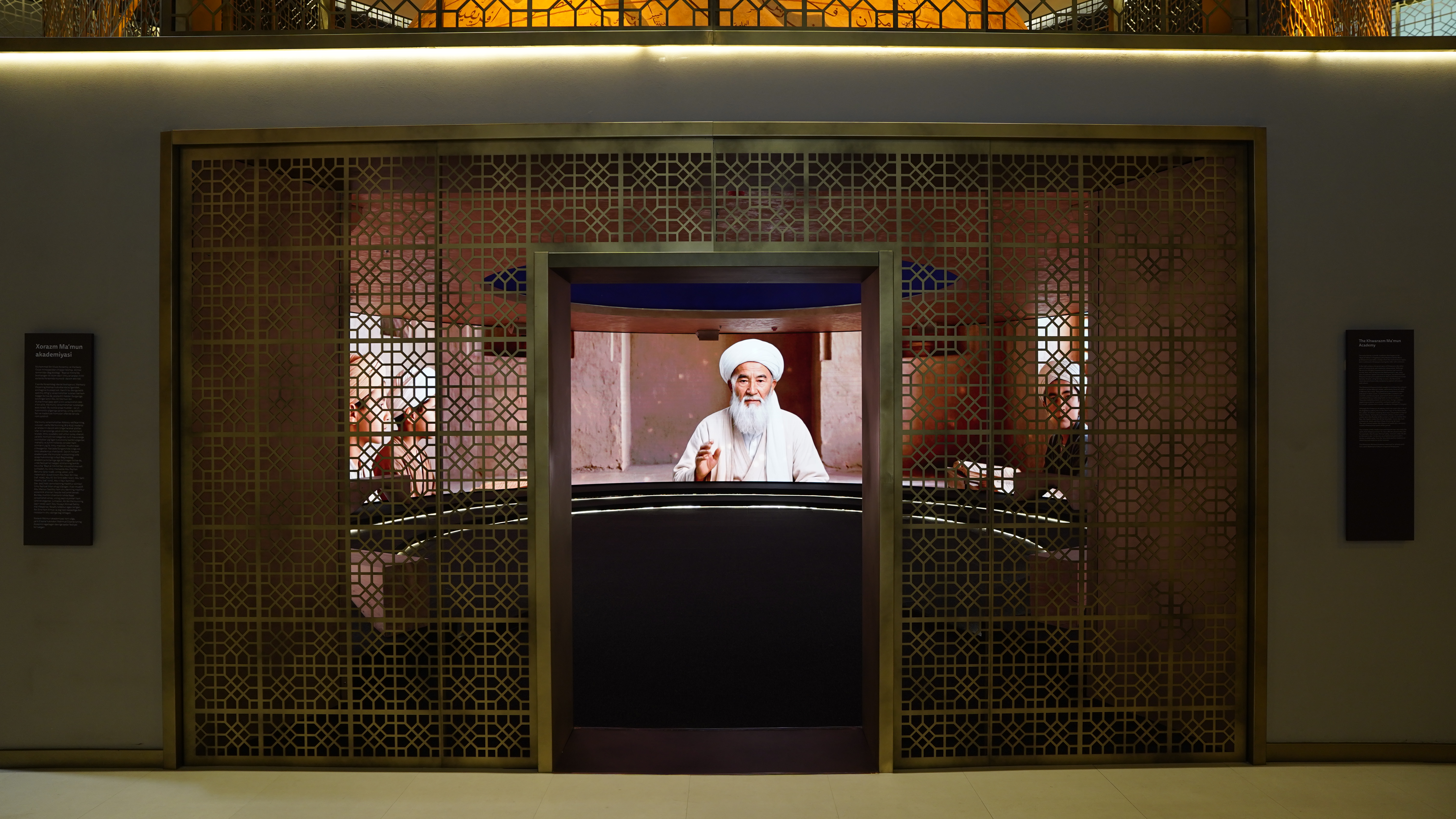
The “First Renaissance Period” section of the exposition of the Islamic Civilization Center in Uzbekistan, the Ma’mun Academy capsule
Formed in the early 11th century on the land of Khorezm, the Ma’mun Academy became a center of science, intellectual thought, and discoveries in the medieval Muslim East. It was here that scholars such as Beruni and Ibn Sina, who shaped the history of intellectual thought, generated new ideas through scientific debates. Despite its short period of activity, the Khorezm Ma’mun Academy, which left an indelible mark on the development of world civilization, occupies a special place in the “First Renaissance Period” section of the exposition of the Islamic Civilization Center in Uzbekistan.
The Ma’mun Academy was established under the patronage of the enlightened ruler Abu al-Abbas Ma’mun II and operated from 1004 to 1017. During this period, the academy became a major center where research was conducted on pressing scientific issues and scholarly debates were held. In particular, the famous scientific correspondence between Ibn Sina and Beruni was the result of intellectual discussions formed precisely in this environment.
In the late 10th and early 11th centuries, state governance in Khorezm was considerably more independent compared to other regions of Central Asia. After the fall of the ancient Afrighid dynasty, Amir Abu Ali Ma’mun ibn Muhammad (995-997), who moved the capital from the city of Kath to Gurganj, proclaimed himself Khwarazmshah and founded the Ma’munid Khwarazmshah dynasty. Although this dynasty ruled for only 22 years, it left a worthy legacy in history as patrons of science and culture.
The Ma’munid Khwarazmshahs sought to continue the scholarly and educational traditions that had developed during the Abbasid period, particularly under Caliph al-Ma’mun (813-833). Distinguished scholars and poets gathered at the court, where favorable conditions were created for scientific and literary creativity. A rich library covering various fields of knowledge was established, and scholarly assemblies and literary gatherings were held with the participation of both local and foreign scholars.
As a result, a distinctive scientific academy took shape in the city of Gurganj.
Although the Khorezm Ma’mun Academy did not reach the scale of the “Bayt al-Hikma” in Baghdad due to the short rule of the Ma’munid dynasty, in terms of the scientific potential of the scholars active there, it was in no way inferior to that center. The academy hosted prominent scholars such as Abu Rayhan Beruni, his teacher, the renowned mathematician and astronomer Abu Nasr ibn Iraq, the great physician and philosopher Abu Ali ibn Sina, Abu Sahl Masihi, and Abu al-Khayr Khammar, all of whom conducted scientific research.
In shaping this scholarly environment, not only the Khwarazmshahs themselves but also their close associates played an important role. For example, Abu Husayn Ahmad Sahli, who served as vizier during the reign of Ali ibn Ma’mun (997-1009), was a person of high intellectual and philosophical stature. It is no coincidence that Abu Ali ibn Sina dedicated some of his treatises on chemistry and medicine specifically to this vizier.
The scientific traditions developed by the scholars of the Khorezm Ma’mun Academy can be linked to the scholarly school founded in the “Bayt al-Hikma” in Baghdad by Muhammad ibn Musa al-Khwarizmi and other Central Asian scholars. These traditions were worthily continued in Khorezm during the 10th-12th centuries.
The Khorezm Ma’mun Academy functioned until 1017, when Khorezm was conquered by Mahmud of Ghazna. Nevertheless, within a short time, this scientific center left an indelible mark on the history of world science.

A 14th-century Hebrew translation of “The Canon of Medicine”
Works created during the period of the academy’s activity, in particular Abu Ali ibn Sina’s “The Canon of Medicine” and “The Book of Healing,” were widely studied for centuries in Eastern countries and were published several times in Europe.

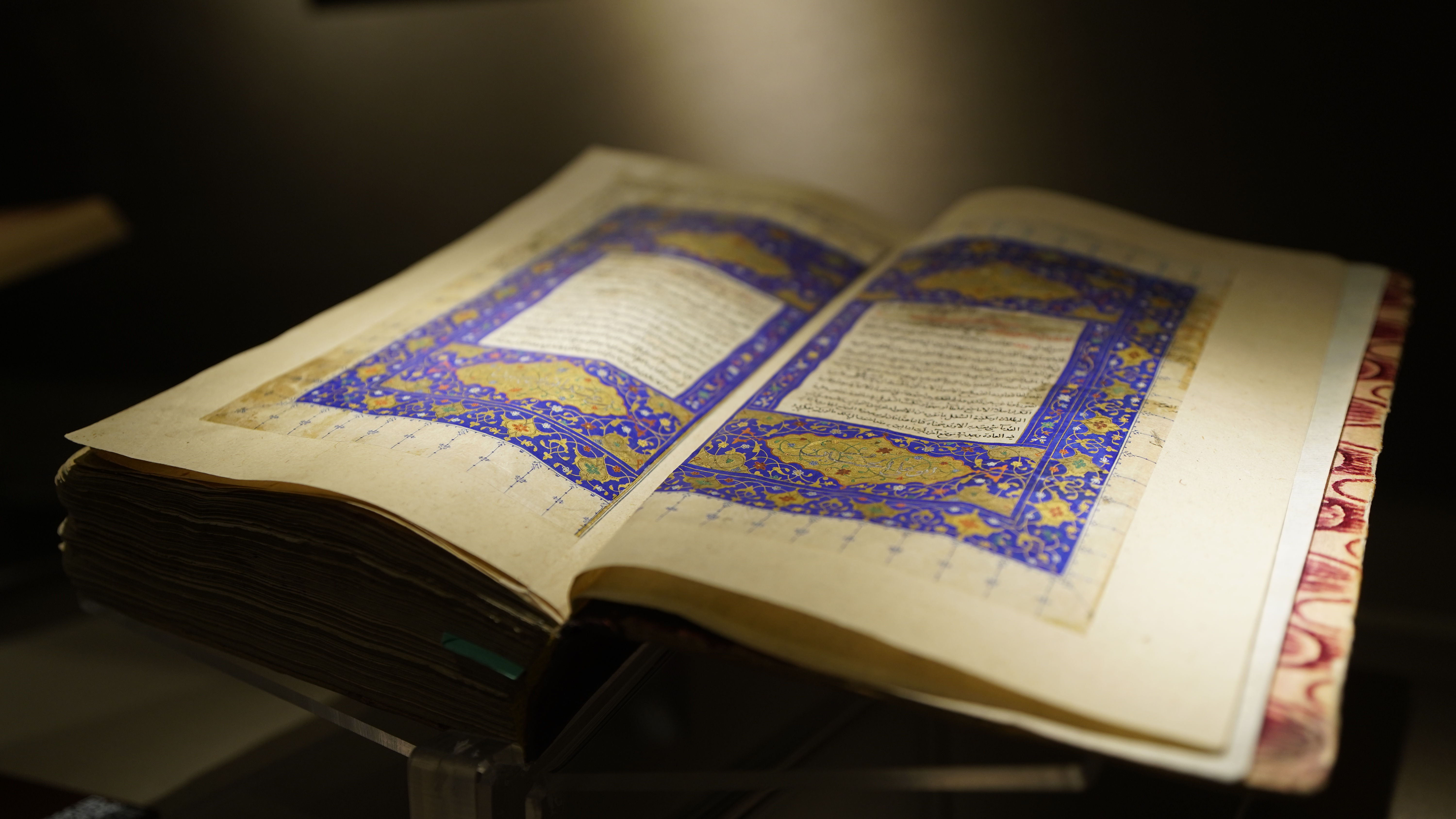
A manuscript of “The Book of Healing” copied in Herat in 1494
Today, rare manuscripts and ancient editions of these works, including a 14th-century Hebrew translation of “The Canon of Medicine” and the manuscript of “The Book of Healing” copied in Herat in 1494, are on display in a special capsule dedicated specifically to the Khorezm Ma’mun Academy within the “First Renaissance Period” exposition of the Islamic Civilization Center in Uzbekistan. This approach in the Center’s exposition serves to promote the Khorezm Ma’mun Academy, which laid the foundations of world civilization, to the global community in an even broader way.
Shahnoza Rahmonova
P/S: The article may be republished with a link to the Center’s official website
Most read

Over 100 experts from more than 20 countries of the world are in Tashkent!

President of Serbia Aleksandar Vučić visited the Islamic Civilization Center in Uzbekistan

The Center for Islamic Civilization – a global platform leading towards enlightenment
