


The scholarly legacy of Imam al-Maturidi and his role in Islamic doctrine are reflected in the museum exhibition

During the First Renaissance period in Central Asia, a new era began in Islamic intellectual thought. In this process of scientific and spiritual flourishing, the great thinker from Samarkand Imam Abu Mansur al-Maturidi occupies a special place in the history of Islamic civilization as a scholar who provided a scholarly foundation for the harmony between reason and faith and strengthened the theoretical basis of Sunni creed.
The scholarly legacy of Imam al-Maturidi had an incomparable impact on the formation of Islamic theology. By grounding belief in rational understanding and substantiating the harmony between reason and revelation, he created a solid theoretical foundation for Sunni doctrine. The wide celebration this year of the 1155th anniversary of Imam al-Maturidi’s birth is clear evidence that his legacy remains relevant today. Established at the initiative of the President of the Republic of Uzbekistan, the International Research Center named after Imam al-Maturidi serves to conduct in-depth study of the scholar’s rich intellectual heritage and to promote effective scholarly dialogue among theologians worldwide.
Abu Mansur al-Maturidi was born in the village of Maturid, located in present-day Jomboy district of Samarkand region. He lived in this area until the end of his life and was buried after his death in the Chokardiza cemetery in Samarkand. His intellectual formation was strongly influenced by the Iyaziya theological school of Samarkand and by local Hanafi scholars.
Al-Maturidi studied under renowned scholars of his time such as Abu Bakr Ahmad al-Juzjani, Abu Nasr Ahmad ibn Husayn al-Iyazi, Nusayr ibn Yahya al-Balkhi, and Muhammad ibn Muqatil al-Razi, and later himself taught the sciences of jurisprudence and theology.
Abdurasul Yakhshiboev, Research Fellow at the Islamic Civilization Center in Uzbekistan:
“Abu Mansur al-Maturidi is the author of fundamental works such as Kitab al-Tawhid and Ta’wilat Ahl al-Sunna. Kitab al-Tawhid is regarded as one of the earliest works in Muslim theology to present a detailed theory of knowledge. While remaining within the bounds of religious doctrine, it elevates rational intellect and recognizes the importance of logically grounded knowledge. The work provides scholarly and well-reasoned refutations of the views of sects that deviated in matters of creed. It is primarily in this work that the Maturidi doctrine is articulated, and to this day its ideas serve as the theological program of followers of the Hanafi school. Kitab al-Tawhid was later commented upon by major scholars, among them Abu al-Mu‘in al-Nasafi in his work Tabsirat al-Adilla.
Abu Mansur al-Maturidi’s Ta’wilat Ahl al-Sunna is a comprehensive, scholarly tafsir distinguished by a powerful and eloquent style. In studying this work, one can observe not only certain general trends characteristic of the Maturidi approach, but also interpretive methods unique to the scholar himself that set him apart from others. In short, this tafsir stands out for its breadth and its deep, multifaceted analysis of Qur’anic verses.
In addition, in works such as Ma’akhidh al-Shara’i‘, Kitab al-Usul, and Kitab al-Jadal, Imam al-Maturidi conducted profound analyses of key theological issues. He explained and further developed the views of Imam Abu Hanifa. The Maturidi doctrine laid a strong foundation for the scientific and cultural advancement of the region.”
The scholar is distinguished by his rational explanation of the foundations of Islam, his advocacy of human free choice, interreligious tolerance, and social cohesion. The contribution of his students and followers to the formation of the Maturidi legacy as an independent theological school is invaluable.
In particular, works such as Abu al-Mu‘in al-Nasafi’s Tabsirat al-Adilla, Umar al-Nasafi’s al-‘Aqa’id al-Nasafiyya, Ala al-Din al-Usmandi’s Lubab al-Kalam, Nur al-Din al-Subuni’s al-Bidaya fi Usul al-Din, Ibrahim al-Saffar al-Bukhari’s Talkhis al-Adilla, and Abu al-Barakat al-Nasafi’s ‘Umdat al-‘Aqa’id are important sources that strengthened the scholarly and theoretical foundations of Maturidi doctrine.
The Maturidi school founded by our great compatriot spread widely across Central Asia, Eastern Europe, the Middle East, and South Asia, and for centuries has served as a symbol of tolerance, moderation, and enlightenment in matters of faith. In our country, at the initiative of the President of the Republic of Uzbekistan, Shavkat Mirziyoyev, the shrines of Imam al-Maturidi and Abu al-Mu‘in al-Nasafi have been comprehensively restored and transformed into well-maintained and sacred sites.

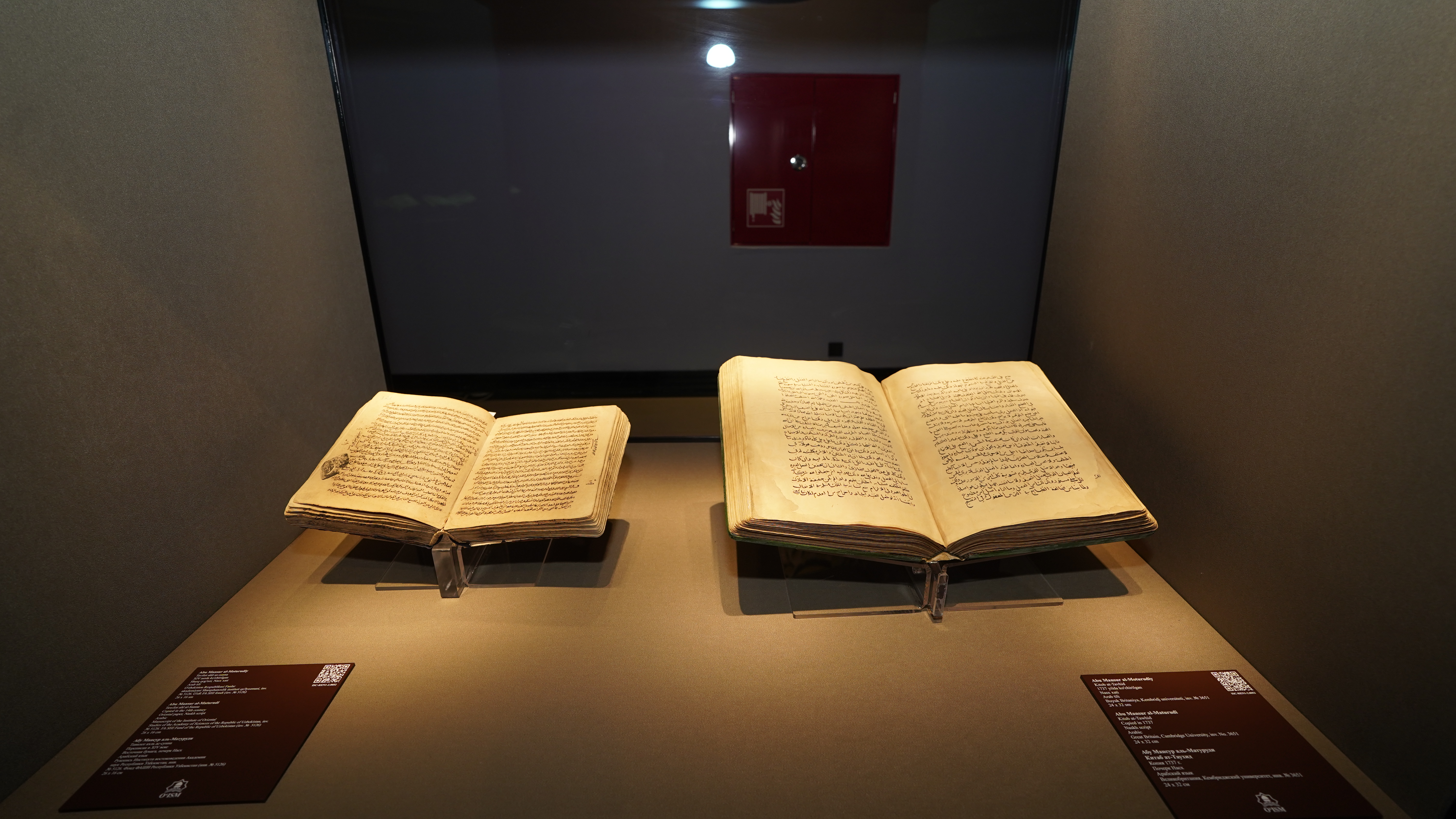
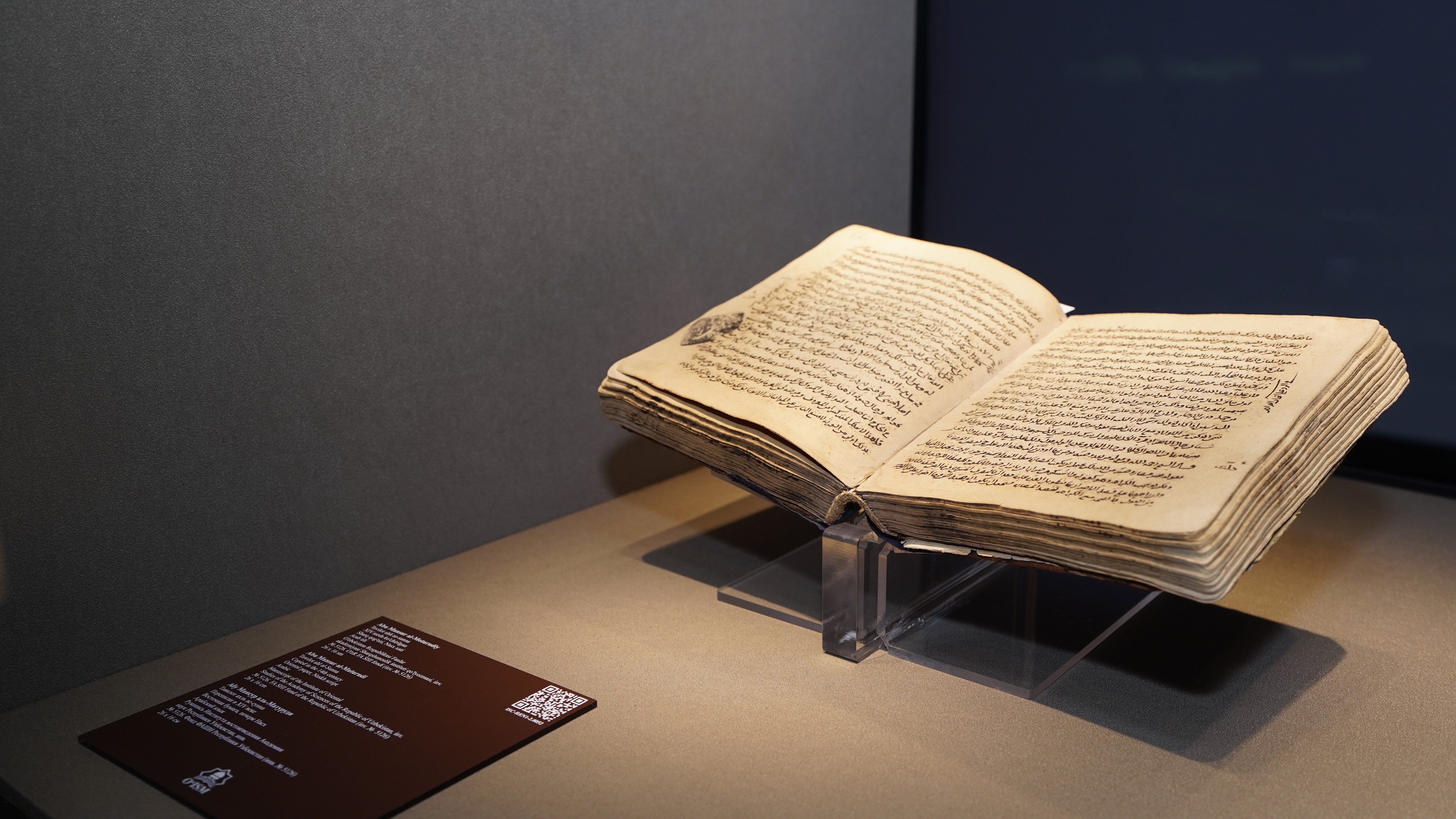
In Capsule 5 of the First Renaissance period section of the museum at the Islamic Civilization Center in Uzbekistan, exhibits include a map showing the global spread of the Maturidi doctrine, a model of the mausoleum of Abu Mansur al-Maturidi, materials on his scholarly works, his followers, the science of creed, wall text panels on attention to Imam al-Maturidi’s legacy in New Uzbekistan, a manuscript copy of Ta’wilat Ahl al-Sunna transcribed in the 14th century, and an original manuscript copy of Abu Mansur al-Maturidi’s Kitab al-Tawhid transcribed in 1737.
In addition, video materials are presented on the five pillars of Islam, al-Maturidi’s scholarly activity, the Maturidi school, and the words of recognition expressed by the President of the Republic of Uzbekistan, Sh. Mirziyoyev, regarding Imam al-Maturidi. The exhibition also features ceramic vessels bearing creed-related texts written in Kufic script.
Today, the legacy of Imam al-Maturidi remains an important pillar of Islamic theological thought, playing a vital role in promoting the ideals of humanism and the harmony of reason and faith.
Shahnoza Rahmonova
P/S: The article may be republished with a link to the official website of the Center.
Most read

Over 100 experts from more than 20 countries of the world are in Tashkent!

President of Serbia Aleksandar Vučić visited the Islamic Civilization Center in Uzbekistan

The Center for Islamic Civilization – a global platform leading towards enlightenment
