


The exhibitions of the Islamic Civilization Center once again left distinguished foreign guests deeply amazed

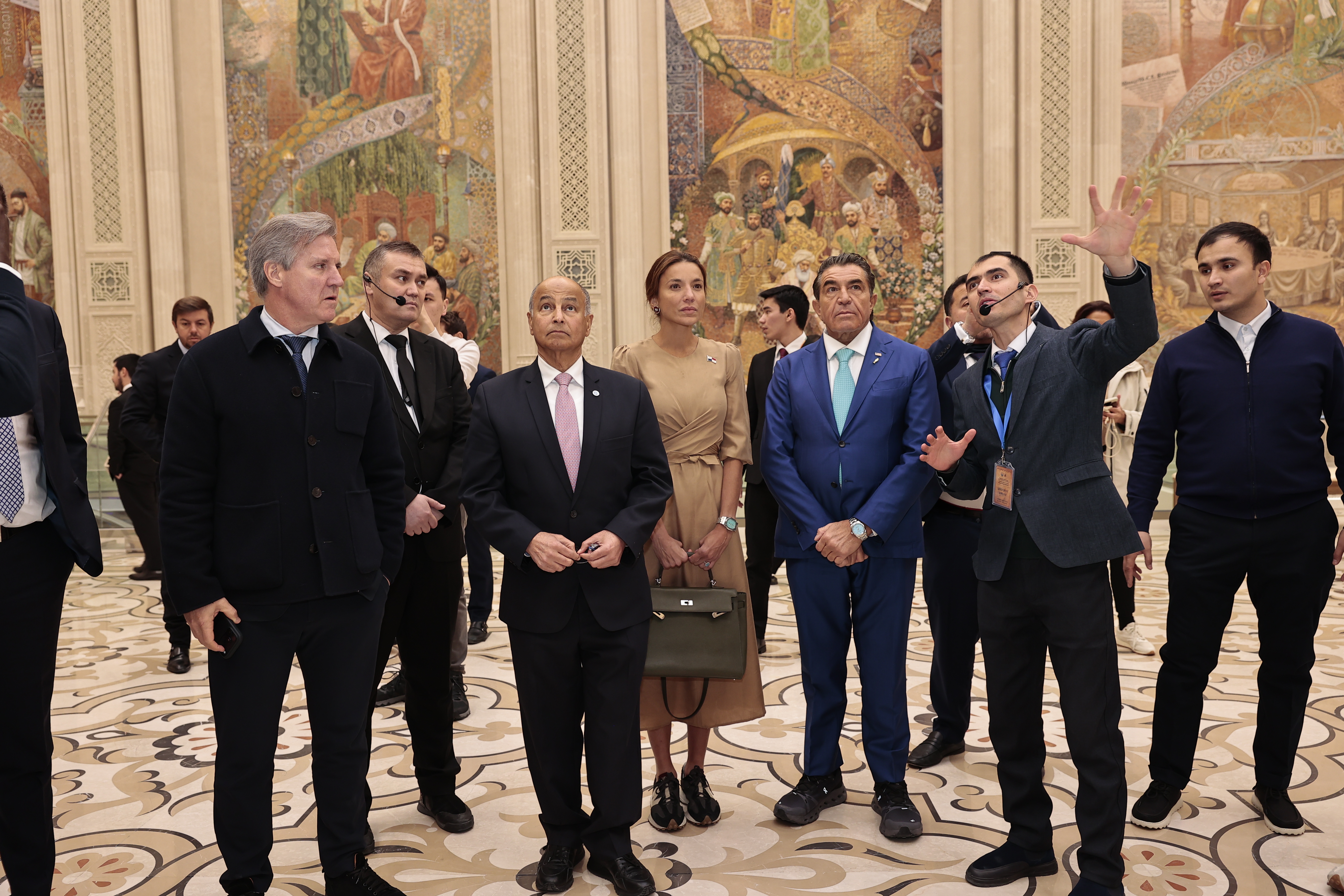
Within the framework of the 46th General Assembly of the Olympic Council of Asia to be held in Tashkent on 26 January, an important visit took place showcasing the history of Central Asia and the scientific and spiritual heritage of Islamic civilization to the world. Accompanied by representatives of the National Olympic Committee of Uzbekistan, the leadership of the Olympic Council of Asia and a number of high-ranking international guests visited the Islamic Civilization Center, established on the initiative of the President of Uzbekistan, Shavkat Mirziyoyev, and through its exhibitions witnessed a vivid example of the harmony of history, science, and modern innovation.
The delegation, led by the National Olympic Committee of Uzbekistan, included members of the Executive Committee of the Olympic Council of Asia (OCA), in particular the OCA Director General and Technical Director and President of World Aquatics, Husain Al Musallam; the First Vice President of the OCA for East Asia, Timothy Tsun Ting Fok; an Honorary Member of the OCA Executive Committee and President of the Brunei Darussalam National Olympic Committee, His Royal Highness Prince Haji Sufri Bolkiah; as well as the Special Representative of the President of the United States for Global Partnerships, Paolo Zampolli. The distinguished guests were welcomed by the Director of the Center, Firdavs Abdulkhalikov. For the delegation, this visit was not an ordinary excursion, but a journey through centuries of knowledge and thought.
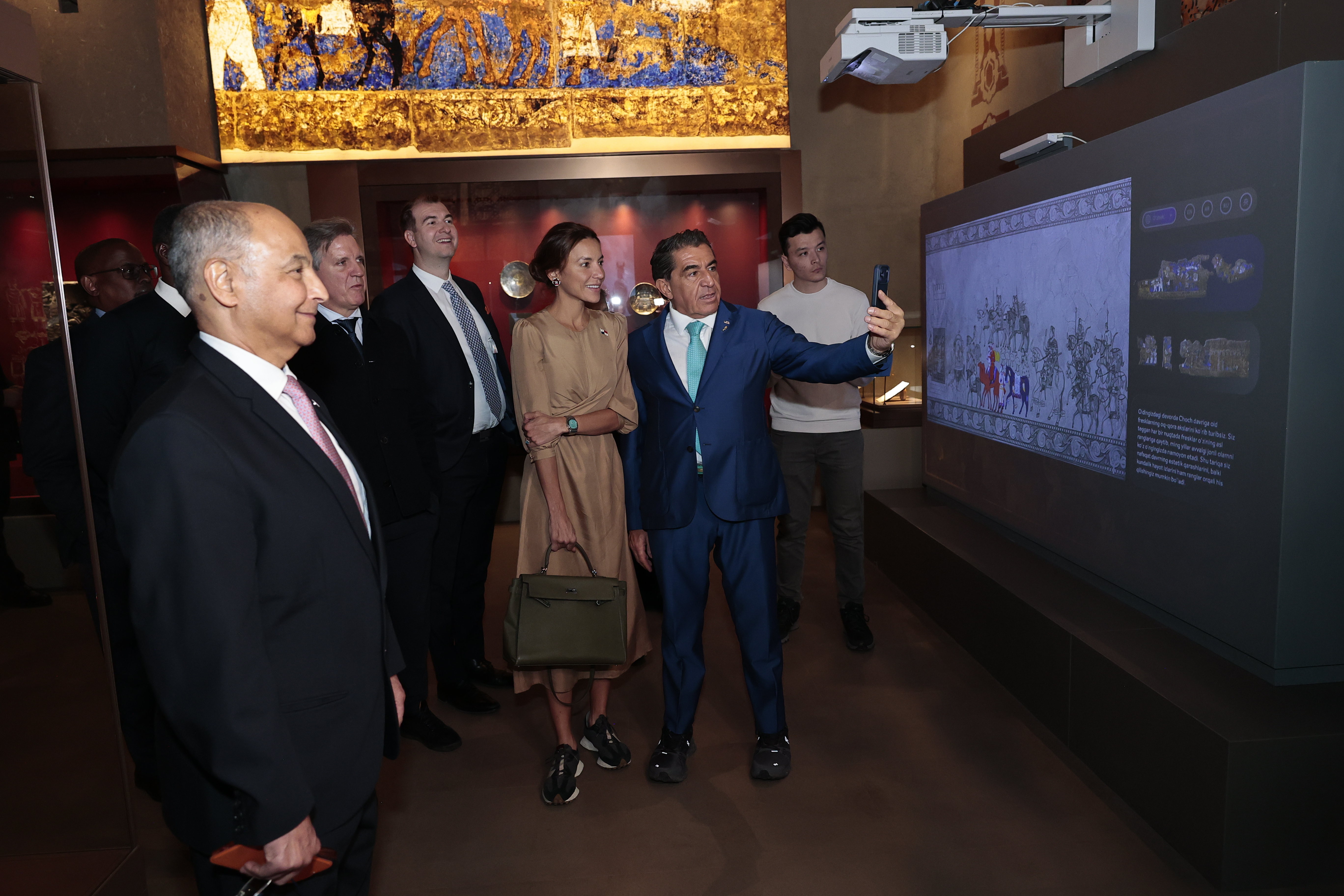
The guests were first introduced to the “Hall of Glory” exhibition, consisting of 14 arches depicting the figures of the First and Second Renaissance periods, Khwarizmi, Fergani, Imam Bukhari and Imam Tirmidhi, Ibn Sina, Beruni, Jalal al-Din Manguberdi, Amir Timur, Mirzo Ulugbek, Alisher Navoi, Zahiriddin Muhammad Babur, and the enlightened Jadid thinkers.
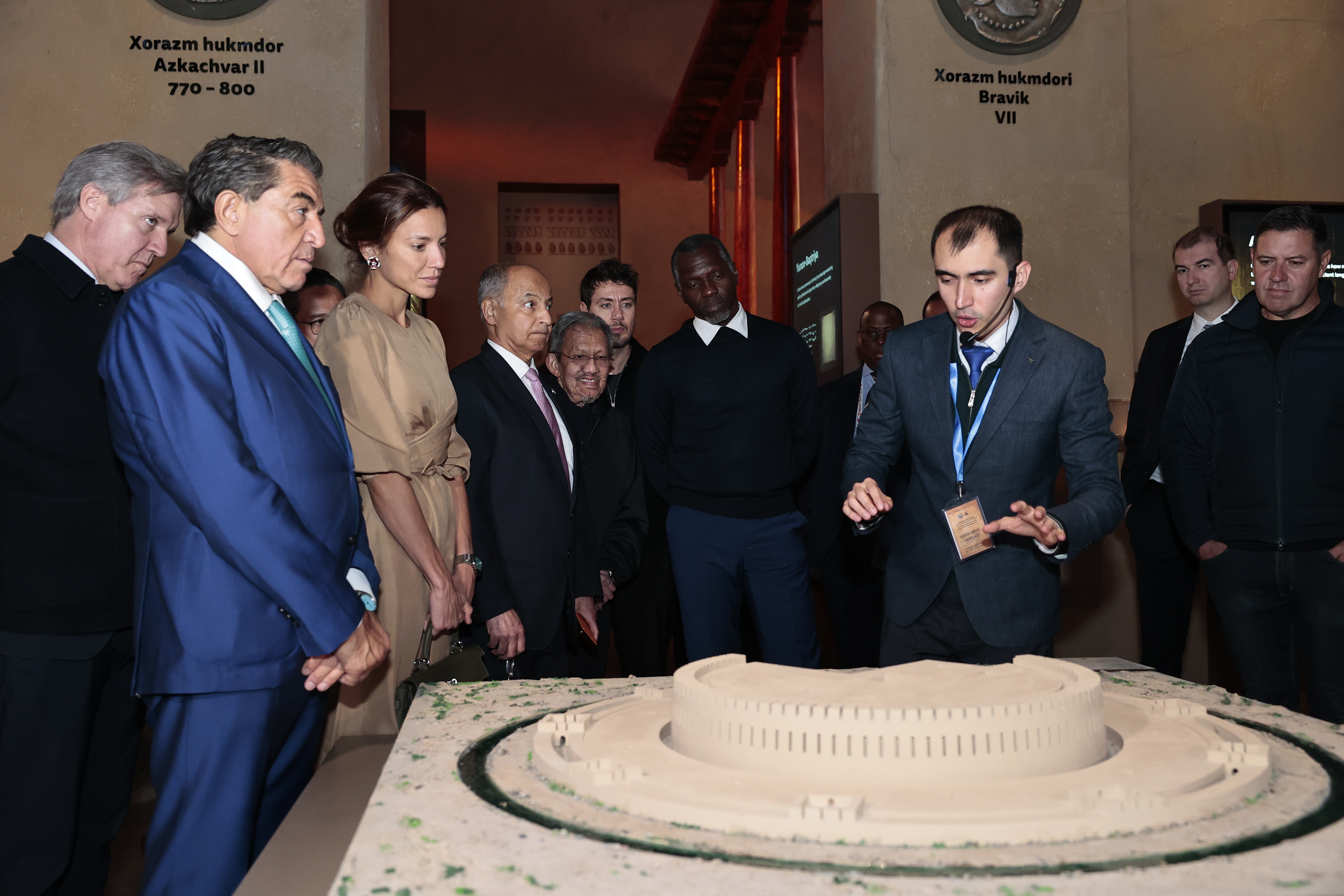
In the pre-Islamic period exhibition of the Center’s museum, the presentation of ancient Khorezm, Sogdian and Bactrian cultures, the heritage of the “Avesta,” archaeological findings, and ancient traditions of statehood offered broader insight into the existence of a highly developed culture and scholarly environment in Central Asia even before Islam. The authentic artifacts on display, the interactive content on the “Wall of Civilizations and Discoveries,” and the unusual glass-enclosed presentation of models of ancient urban settlements particularly captured the guests’ interest.
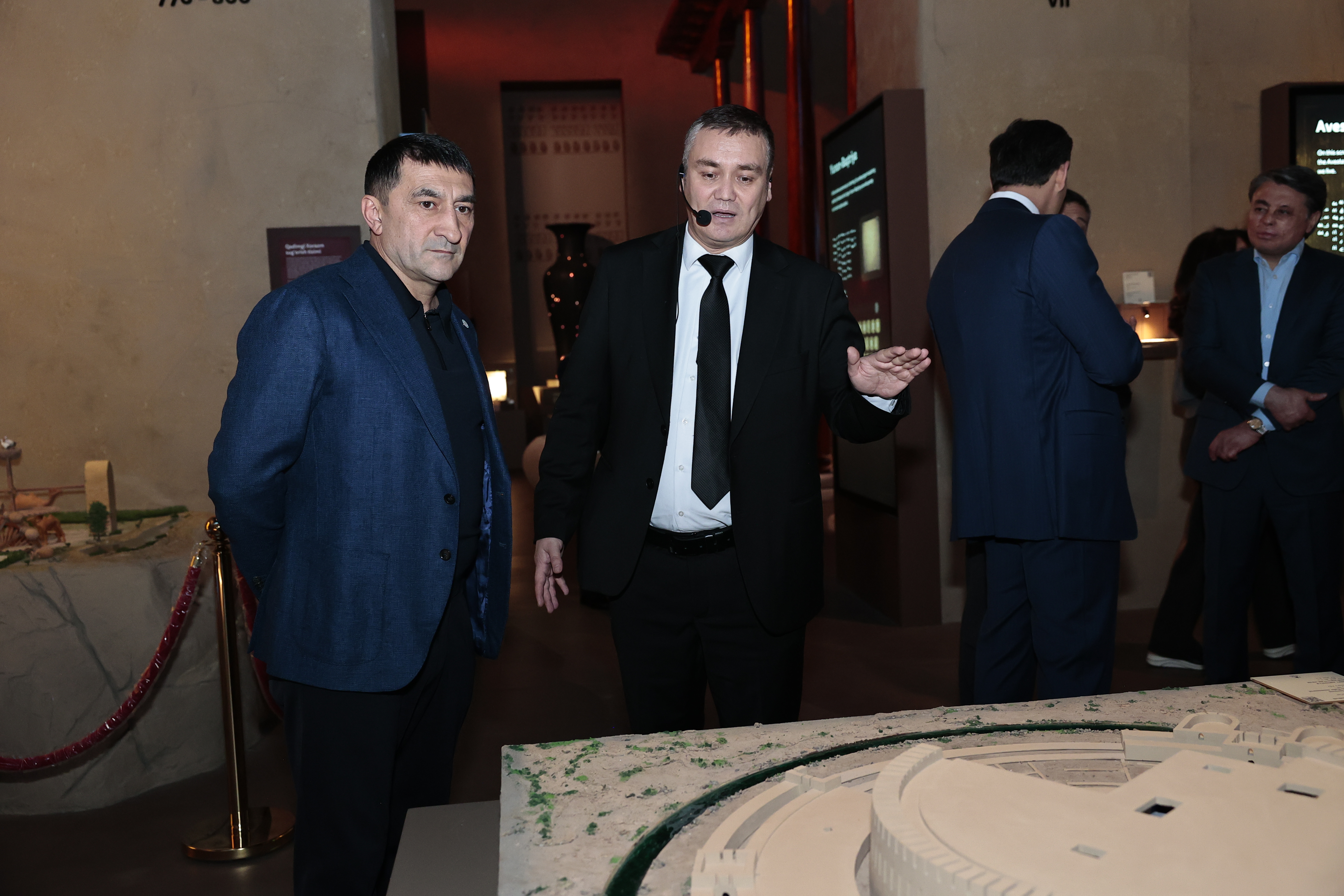
While viewing the “Great Silk Road Map” exhibition, it was emphasized that Uzbekistan’s location at the crossroads of this historic trade route formed the basis for its broad development both in the past and today.

In the First Renaissance section of the museum, the guests witnessed how, through modern museum technologies, the gateway opened by Muhammad al-Khwarizmi to the world of numbers in the 9th–12th centuries, Abu Rayhan Beruni’s cosmic perspectives, and Ibn Sina’s scientific views on human intellect and nature were brought to life. This exhibition enabled every visitor to feel how science in Central Asia became an integral part of world civilization.
In particular, the authentic Kaaba covering displayed in the First Renaissance exhibition and its presentation to the Center caused great astonishment among the guests. In the Imam Bukhari capsule within this section, visitors received comprehensive answers to their questions, and the information presented further deepened their interest in this great hadith scholar.
They also expressed great interest upon learning that Samarkand paper had been produced at such a high quality as early as a thousand years ago.
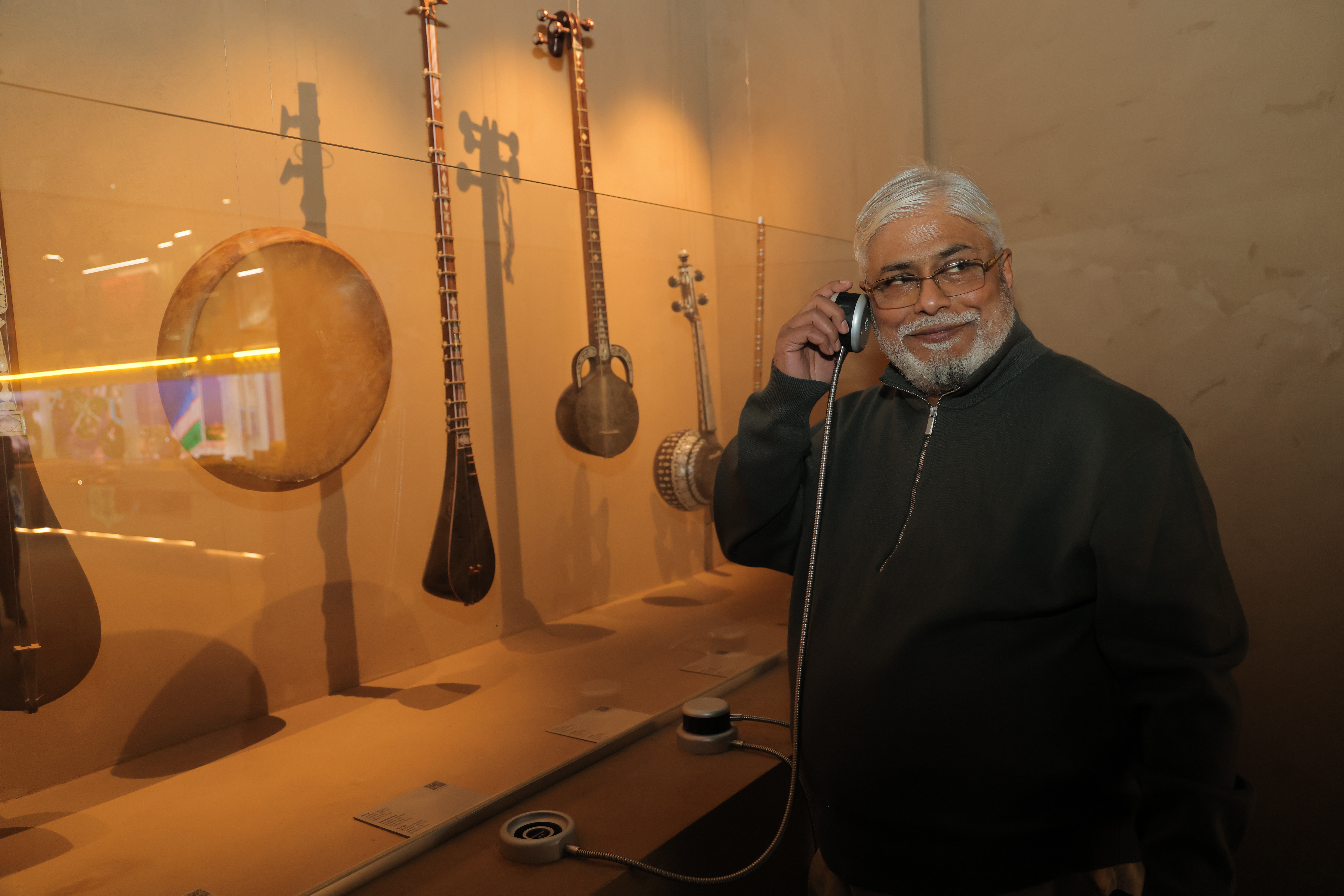
In the “Second Renaissance” section, guests came face to face with the spiritual power of the Timurid era. The elevation of science, art, and architecture to the level of state policy under Amir Timur, the transformation of Samarkand and Herat into major centers of learning, and the outstanding examples of calligraphy and miniature art were vividly demonstrated. Through manuscripts, architectural models, and visual installations, guests did not merely observe history but truly experienced it.
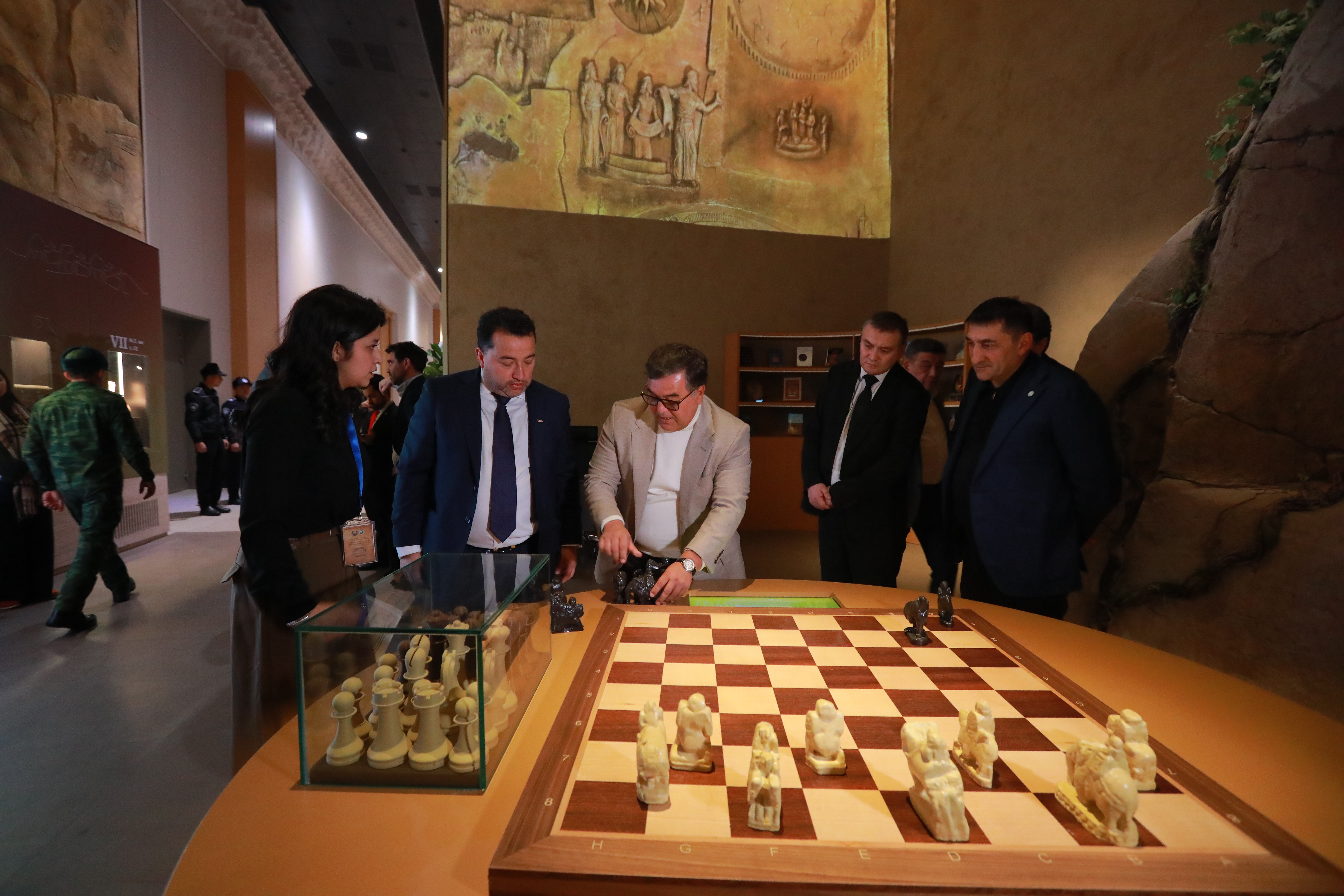
One of the most memorable moments of the visit was when the Special Representative of the U.S. President for Global Partnerships, Paolo Zampolli, and the OCA Director General and Technical Director and President of World Aquatics, Husain Al Musallam, moved chess pieces on a chessboard placed in the Amir Timur Library exhibition in this section.
The guests also became acquainted with the New Uzbekistan Innovation Library on the second floor of the Center’s building, designed for 226 seats and capable of serving 286 people simultaneously. In the library, which has a capacity of 350,000 printed volumes, Paolo Zampolli proposed the opening of a U.S. library section.


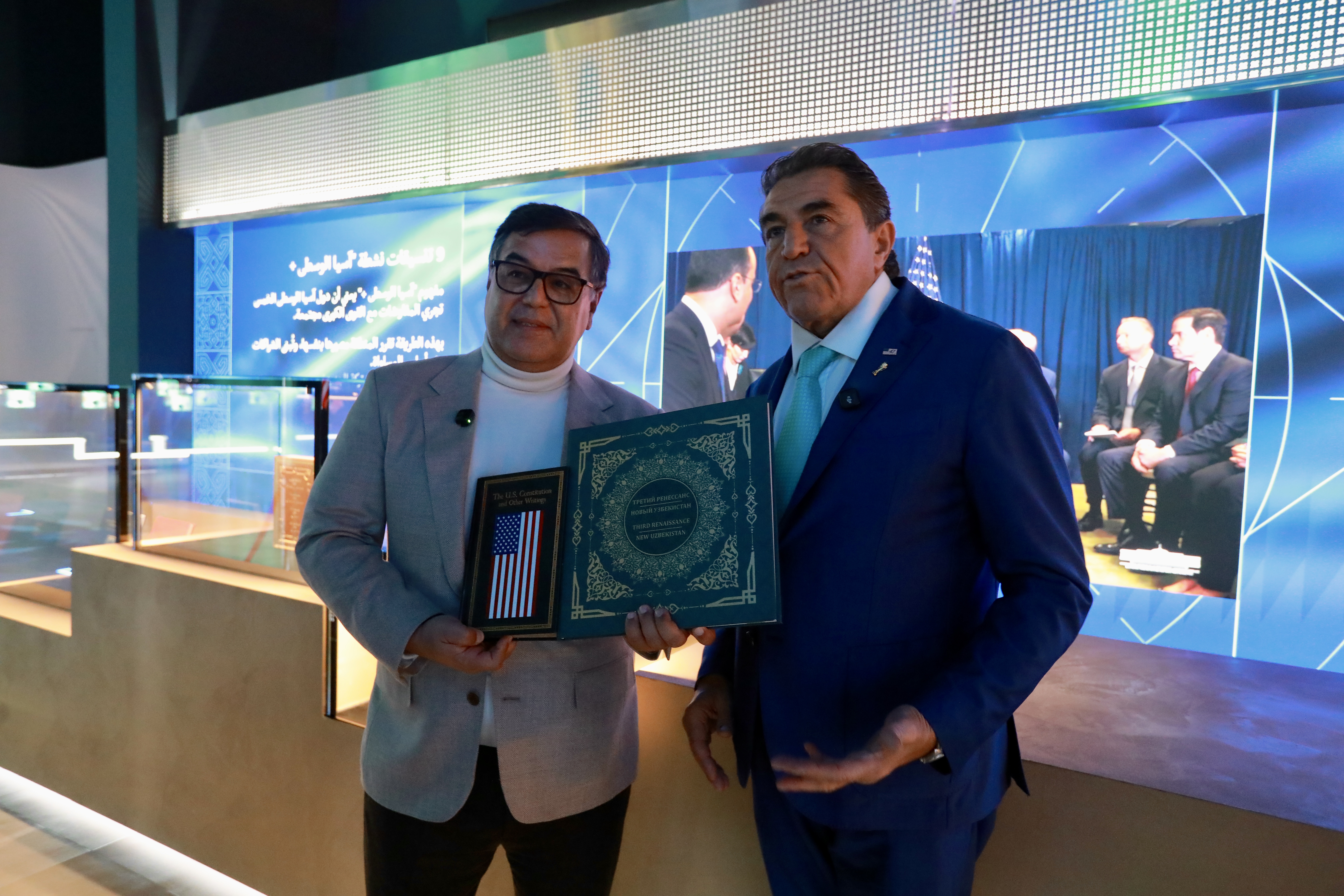
In the “New Uzbekistan – Foundation of a New Renaissance” section, guests were welcomed by a special video reflecting the stages of development of New Uzbekistan over the past ten years under the leadership of President Shavkat Mirziyoyev, as well as its international relations and partnerships. The abundance of innovative projects in this section’s exhibitions left a strong impression on the visitors. During the visit, Paolo Zampolli presented a copy of the U.S. Constitution to the international relations exhibition in this section.
During the visit, the delegation also toured the “Holy Qur’an Hall,” which houses the rare Uthman Mushaf, showcases rare manuscript copies of the Qur’an, ancient traditions of book production, Islamic book culture, and the development of calligraphy. The guests highly appreciated that the rare Uthman Mushaf displayed at the center of the hall is included in UNESCO’s World Heritage List and recognized it as a significant and reliable source. This is yet another effective result of the initiative of the President of Uzbekistan, Shavkat Mirziyoyev.
Paolo Zampolli, Special Representative of the President of the United States:
First of all, I would like to express my sincere gratitude to Mr. President for giving me the opportunity to visit this Islamic Civilization Center in advance. This center is truly an extraordinary and unparalleled project. I visited here in September, and today I also had the honor of standing beside the Holy Book.
Over the past three months, relations between the Presidents of the United States and Uzbekistan have been developing at a very rapid pace. The Presidents met three times within a few months, which is a remarkable achievement.
We also participated together with President Shavkat Mirziyoyev in the meeting of world leaders in Davos, Switzerland. The sports sector in Uzbekistan is also developing rapidly and moving in the right direction. This is truly a new Renaissance era. Once again, congratulations. Let us continue working together and further strengthen cooperation between the United States and the Republic of Uzbekistan. Let us make Uzbekistan great again on its path toward a golden era. I wish Uzbekistan success on its road to the FIFA World Cup.
Timothy Tsun Ting Fok, First Vice President of the Olympic Council of Asia for East Asia:
First of all, I would like to thank you for organizing this event in the beautiful city of Tashkent and for giving us the opportunity to visit your country. The Islamic Civilization Center left a very strong impression on me. Here, Uzbekistan’s rich history and its tremendous contribution to science, medicine, and culture are clearly demonstrated.
The museum organically connects the past and the present, clearly showing the path from an ancient civilization to a modern and dynamically developing state. The sections dedicated to the Great Silk Road and the lifestyle of ancestors were particularly fascinating.
Such a large-scale project implemented in a short period of time under the leadership of President Shavkat Mirziyoyev deserves very high recognition at the international level. This center is not only a repository of historical knowledge but also a place that brings peoples closer together and strengthens mutual understanding.
In addition, the great attention paid to sports in Uzbekistan and the modern infrastructure being developed create broad opportunities for the younger generation. Sports strengthen unity and cooperation along with promoting a healthy lifestyle.
As Vice President of the Olympic Council of Asia, I highly appreciate Uzbekistan’s efforts in this direction and believe that our cooperation will continue to expand in the future.
Husain Al Musallam, President of World Aquatics:
I am very pleased to be at this beautiful Islamic Civilization Center in Tashkent. Together with my colleagues from five continents of the world, we visited this place. We were deeply impressed by how Uzbekistan’s 3,000-year-old rich history and civilization are presented in such a harmonious and elegant manner. All historical periods are interconnected and presented in a very thorough and impactful way. I congratulate you on these achievements. This is truly a great success.
Next November, the World Aquatics Championships will be held in Tashkent. Champions from all over the world will come here and will also have the opportunity to visit this museum.
Gaji Gajiyev, Vice President of the National Olympic Committee of Kazakhstan:
My impressions of this center, established on the initiative of your President, are extremely positive. This place is a grand and unparalleled initiative aimed at preserving traditions and history. I would like to express my deep gratitude to your respected President for such an important decision.
The significance of this center lies in the fact that it serves not only foreign visitors, but above all the younger generation. It is extremely important for young people to know their roots and history and to feel it deeply. When the opportunity is created to see and experience history, a sense of respect and gratitude toward the past is formed among the youth. This is achieved not merely through words, but through the practical and vivid presentation of history.
Alongside the upbringing provided at school and in the family, centers like this further strengthen young people’s relationship with history. They do not just hear that their people have a great past; they see it with their own eyes and feel it with their hearts. This has immense educational and spiritual significance.
Therefore, I would once again like to express my sincere gratitude to your President. Here, not only the history of Uzbekistan but also important chapters of the history of the entire Central Asia and the Great Silk Road are reflected. Frankly speaking, such a comprehensive and well-developed complex is almost nonexistent in Central Asia.
In particular, the presentation of the pre-Islamic and Islamic periods as a unified whole is a very bold and courageous decision. It is also important to acknowledge the beginning of efforts to repatriate historical artifacts. This gives your people the opportunity to see and feel their own history and to understand how the history of a great state and a great nation was formed.
Such initiatives are of invaluable importance in strengthening national identity, restoring historical memory, and educating future generations in the spirit of a great past.
Viktor Husaraman, Advisor to the President of World Aquatics:
My visit to the Islamic Civilization Center left a very strong impression on me. In my opinion, there is no such center anywhere else in the world. I have visited many countries, including Yemen, where the roots of Islam were formed, and I have seen wonderful mosques and numerous historical Islamic monuments there. However, this center is absolutely unique and one of a kind. Here, not only the history of Islam, but also an immense and valuable collection related to the history and culture of Uzbekistan has been gathered. For this reason, I was deeply impressed.
In recent years, Uzbekistan has also achieved significant successes in sports. The eight gold medals won at the Paris Olympics demonstrated the country’s strong sporting potential. Most of these medals came from combat and martial arts disciplines. Today, the construction of a Water Sports Center indicates that the country is opening up to other sports disciplines as well. Together with the President and the leadership of the Olympic Committee, there are great opportunities to nurture new talents and discover them not only in Tashkent, but throughout the entire country.
Today, sports and culture serve as a common language amid global tensions. Culture acts as a bridge between different peoples, bringing them closer by showcasing historical roots and heritage. As I understand it, a special working group is making efforts every year to identify historical artifacts and roots around the world, return them to Uzbekistan, and display them in this center. These initiatives of President Shavkat Mirziyoyev should be supported by all of us. Sports, likewise, are a universal and peace-serving platform that unites different nations.
Within the framework of the Olympic Council of Asia, Uzbekistan also plays a very active role. The planned hosting of the Asian Youth Games in 2029 demonstrates the country’s contribution not only to its own development, but also to the regional and global sports community.
The exhibits at the Center also greatly intrigued me. For example, I learned that a 400-year-old example of chess, previously believed to have originated in India, actually emerged in Uzbekistan. This was a new and interesting fact for me. I also learned about a book created in the 10th century after the Qur’an, which compiled knowledge related to the Islamic world. These are major cultural and scholarly achievements. For this reason, the artifacts collected here truly amazed me.
The visit to the Islamic Civilization Center, established on the initiative of President Shavkat Mirziyoyev, once again demonstrated that this place is not merely a museum, but an intellectual space that connects history, knowledge, and the future. This visit showed how important cultural and educational dialogue is alongside sports diplomacy.
Most read

Over 100 experts from more than 20 countries of the world are in Tashkent!

President of Serbia Aleksandar Vučić visited the Islamic Civilization Center in Uzbekistan

The Center for Islamic Civilization – a global platform leading towards enlightenment
